There is something about a well-designed kitchen island that makes the whole room feel pulled together — like the house finally exhaled. Whether you are renovating from scratch or simply refreshing what you have, the right island can be the piece that transforms your kitchen from functional to genuinely beautiful.
1. The Two-Tone Island That Makes Your Kitchen Feel Custom-Built
There is a reason the two-tone kitchen island trend refuses to go away — it just works. The idea is beautifully simple: paint or finish your island in a color that contrasts with the rest of your cabinetry. If your upper and lower cabinets are a crisp white or soft cream, consider grounding your island in a deep navy, forest green, or warm charcoal. The contrast draws the eye immediately, making the island feel intentional and designed rather than like an afterthought. It creates visual weight in the center of the room, which is exactly where you want the energy to land. Even in a smaller kitchen, this technique adds a sense of depth and layering that feels genuinely custom.
The key to pulling this off beautifully is in the hardware. Swap out standard builder-grade knobs for something with a little character — unlacquered brass pulls, matte black bar handles, or aged bronze cup pulls all feel elevated against a dark island base. The countertop material matters here too. A butcher block top warms up a dark navy base in a way that feels cozy and lived-in, while a white or light grey quartz countertop against a forest green island strikes a cleaner, more modern note. Think about what mood you want the kitchen to carry, and let that guide your pairings. The combination of tones is what gives the island its personality.
For styling the surface, keep things purposeful and edited. A simple ceramic bowl holding citrus fruit, a small potted herb, or a clean stack of cookbooks can be all you need. Overhead, consider pendant lights that echo one of your two tones — a matte black pendant over a charcoal island creates a cohesive throughline, while a warm brass pendant over navy adds a touch of richness. The lighting here is not just functional; it frames the island like a piece of furniture worth noticing. This is one of those design moves that looks expensive but is entirely achievable with a can of paint and a few thoughtful swaps.
2. Open Shelving on the Island Sides for Displayed Storage
One of the most practical and visually interesting things you can do with a kitchen island is open up the sides. Instead of enclosing every inch of storage behind cabinet doors, consider building in open shelving on one or both ends of the island. This creates an opportunity to display the things you use every day — cookbooks stacked with their spines facing out, a collection of ceramic mixing bowls in earthy tones, a row of glass jars filled with dried pasta or grains. These are the small details that make a kitchen feel like it belongs to someone who actually loves being in it. Open shelving on an island also makes the space feel less heavy and more breathing, which is especially valuable in kitchens that lean smaller.

The styling of open island shelves is where things get genuinely fun. Think about layering textures and heights rather than lining things up uniformly. A tall olive oil bottle next to a short stack of small plates creates movement. A trailing pothos or a small rosemary plant tucked beside a wooden serving board adds life and organic softness. Keep a consistent but relaxed color palette — natural wood tones, matte ceramics in whites and taupes, and the occasional touch of black or brass — so the shelves look curated rather than cluttered. The goal is to make the everyday items feel worth looking at, because they genuinely are.
Lighting plays a supporting role here that most people overlook. If you have open shelves on your island, consider adding a small recessed light or a puck light underneath the countertop overhang that washes the shelf contents in a warm glow during evening hours. It creates an unexpected coziness — the kind that makes you want to linger in the kitchen even after the dishes are done. Pair the island with bar stools that have an open, airy frame (think metal legs with a simple seat) so the whole setup feels cohesive and uncluttered. This is storage that doubles as decor, which is the best kind.
3. A Waterfall Countertop Island for a Sleek, Modern Statement
If you have been scrolling through modern kitchen inspiration for any length of time, you have almost certainly paused on a waterfall island. The look is defined by a countertop material — usually stone, quartz, or a high-end porcelain slab — that does not stop at the edge of the island but instead flows continuously down the sides, all the way to the floor. The effect is architectural. It makes the island feel less like a piece of furniture and more like a sculptural element that was designed into the bones of the room. It is one of those upgrades that reads as luxurious even when the rest of the kitchen stays relatively simple.
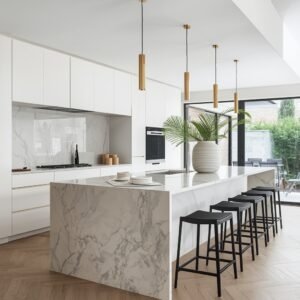
The material you choose for the waterfall becomes the star of the show, so it is worth spending real time on this decision. A dramatic Calacatta marble with bold grey veining creates maximum visual impact, especially in a kitchen with minimal upper cabinetry. A honed black granite or a soft concrete-look porcelain, on the other hand, leans into an industrial-modern vibe that feels incredibly current. Whatever you choose, make sure the veining or patterning on the horizontal surface aligns seamlessly with the vertical drop — this matched mitering is what separates a polished waterfall island from one that feels like an afterthought. It requires skilled fabrication, but the result is extraordinary.
For the rest of the kitchen, let the island carry the visual weight and keep supporting elements calm and understated. Flat-front cabinetry in a warm white, greige, or very pale oak complements the stone without competing with it. Choose bar stools that are sleek and low-profile — a simple backless stool with a metal frame lets the island speak for itself. Overhead lighting should be equally considered: a single long linear pendant or two simple cylindrical lights in a warm metal finish reinforces the clean, unbroken lines of the waterfall aesthetic. Add a single sculptural object — a large ribbed vase, a smooth stone bowl — on the surface and stop there. Restraint is the whole point.
4. A Rustic Wood Island That Brings Warmth Into a White Kitchen
A white kitchen is timeless and bright, but it can sometimes tip into feeling a little cold or clinical if there is not enough warmth to balance it out. A rustic wood island is one of the most effective antidotes to that problem. Whether you are working with a reclaimed wood base, a live-edge countertop, or simply a painted island with a butcher block surface, the introduction of natural wood grain immediately softens the whole room. It brings in the kind of organic texture that no tile or paint can replicate — the grain, the knots, the slight variation in color that makes it feel like something that has a story. In a sea of white, it becomes the element the eye rests on.
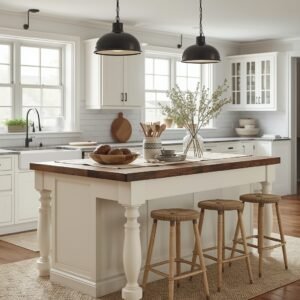
The beauty of a rustic wood island is how easily it adapts to different kitchen styles. In a farmhouse kitchen, it feels completely at home alongside apron-front sinks and open shelving. In a more transitional or modern kitchen, a clean-lined wood island with simple hardware acts as an unexpected warm note that prevents the space from feeling sterile. The trick is choosing the right wood tone for your existing palette. A light ash or white oak island works beautifully in a cool-toned white kitchen, while a warm walnut or honey pine island pairs naturally with cream or warm grey cabinetry. Think of the wood as your kitchen’s version of a warm throw blanket — purposeful, textural, comforting.
Accessorize a wood island in ways that lean into its natural character. Woven rattan bar stools, an aged copper or matte black pendant light, a ceramic crock holding wooden spoons, and a bundle of dried herbs or lavender hanging nearby all feel completely at home. Avoid overly polished or shiny accessories, which can clash with the organic quality of the wood. Instead, look for pieces with a handmade or artisan feel — hand-thrown pottery, linen runners, hand-stitched dish towels. These small details reinforce the warmth that the wood island introduces and make the kitchen feel genuinely inviting rather than just well-decorated.
5. The Painted Island With Vintage-Style Legs for a Furniture Look
One of the most charming directions you can take a kitchen island is away from built-in cabinetry and toward something that looks like a beautiful piece of antique furniture that simply happens to live in your kitchen. The furniture-style island, characterized by turned or tapered legs, a slightly imperfect painted finish, and an overall silhouette that references European country kitchens, brings a softness and individuality to the space that standard cabinetry rarely achieves. It feels collected rather than constructed, which is exactly the kind of character that makes a kitchen memorable. This approach works especially well in traditional, cottage, or French country-style homes, but it can also add charming contrast in a more modern space.
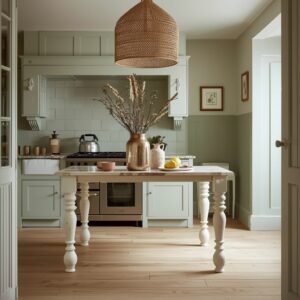
The legs are the defining feature, so choose them carefully. Turned spindle legs in a soft white or pale grey feel quintessentially English country. Tapered legs with a slight flare reference mid-century European farmhouse style. Cabriole legs bring a more formal, antique quality. Whatever profile you choose, make sure the leg height is proportionate to the island body — legs that are too short make the island look stumpy, while legs that are appropriately long give it that lifted, airy quality that makes it read as furniture. Finish the piece in a slightly chalky or matte paint — Farrow and Ball’s “Mizzle,” Benjamin Moore’s “Pale Oak,” or a washed sage green all feel appropriately soft and aged without looking grimy.
Style the top with a marble or butcher block surface to reinforce the vintage aesthetic, and layer in accessories that feel like they were gathered slowly over time rather than purchased as a set. A small mercury glass vase, a vintage-style ceramic canister, a woven basket tucked underneath between the legs — these are the kinds of details that make people stop and say the kitchen feels “charming.” Hang a simple rattan or aged brass pendant above, and pair with cross-back wooden chairs or cushioned stools that continue the furniture-as-kitchen-decor story. This island style rewards thoughtfulness in the details.
6. Dark and Dramatic: A Black Island in a Light Kitchen
The idea of putting a black island into an otherwise light kitchen might feel bold, but it is one of those design decisions that almost always pays off. A matte or satin black island creates a striking focal point, and because it is grounded in the center of the room, it anchors the entire space without making it feel dark or heavy. Think of it the way an interior designer might think of a black accent wall — it adds drama and definition, and it makes every lighter element around it feel fresher and more intentional by contrast. In a white or pale grey kitchen, a black island has the immediate effect of making the room look more sophisticated and deliberately designed.
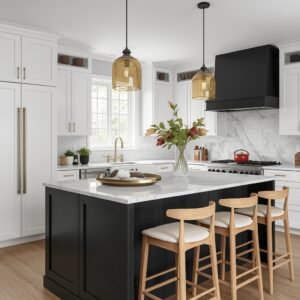
The countertop material you pair with a black island can shift the mood significantly. A white or light grey marble countertop against a black base creates a classic, high-contrast look that feels both timeless and current — it is the kitchen equivalent of a black-and-white photograph. A warm butcher block on a black island, on the other hand, introduces a bit of warmth and personality that softens the drama and keeps the space from feeling too severe. If you want to lean into the moody aesthetic fully, consider a dark honed granite or a black soapstone countertop on the island — the tonal variation within the stone adds richness and depth that feels almost atmospheric.
Lighting is especially important when working with a dark island because you want to illuminate it rather than let it disappear into the room. A cluster of warm-toned pendants — whether brass, copper, or smoked glass — hanging directly above creates a halo of light that makes the island glow. Choose bar stools with a lighter upholstered seat or a natural wood seat to break the dark base visually. Accessorize the countertop with light, natural, and warm-toned objects: a white marble mortar and pestle, a brass tray holding small glass bottles, a simple cream ceramic bowl. The contrast between the dark island and the lighter objects on top is where the visual magic happens.
7. The Built-In Seating Island That Creates a Casual Dining Nook
There is something about a kitchen island that doubles as a casual dining spot that makes a home feel genuinely livable. When one side of the island extends into a generous overhang and a built-in bench with cushions tucked underneath, the island stops being a workspace and becomes the place where everyone gathers — coffee in the morning, homework in the afternoon, lingering conversations after dinner. This style of island is especially well-suited to open-plan spaces where the kitchen flows into the living area, because it creates a gentle zone that signals “sit down and stay a while” without requiring a separate dining room or table.
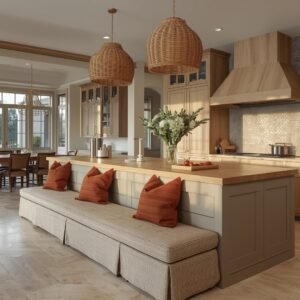
The built-in bench element requires some thought in terms of proportion. The overhang of the countertop should extend at least twelve to fifteen inches on the seating side to allow comfortable legroom, and the bench seat should be positioned so that the top of the island countertop sits at a comfortable elbow height for someone seated. Upholster the bench cushion in a performance fabric — a woven linen blend or a textured boucle in a neutral tone works beautifully and holds up to the reality of daily life. Add a row of accent pillows in complementary tones, and suddenly the bench feels less like a kitchen accessory and more like a small sofa nook that happens to be beside the stove.
The island itself, on the working side, can carry all the storage you need — deep drawers for pots, built-in outlets for appliances, even a small wine fridge or drawer refrigerator integrated into the base. Overhead, pendant lights should hang at a height that works for both the working side and the seating side — usually around thirty to thirty-six inches above the countertop surface. Choose something with a warm bulb that creates the feeling of a lamp rather than a task light, because the moment people start sitting at an island, you want the lighting to shift from functional to welcoming. This is kitchen design at its most human.
8. The Marble-Top Island Styled With Greenery and Natural Elements
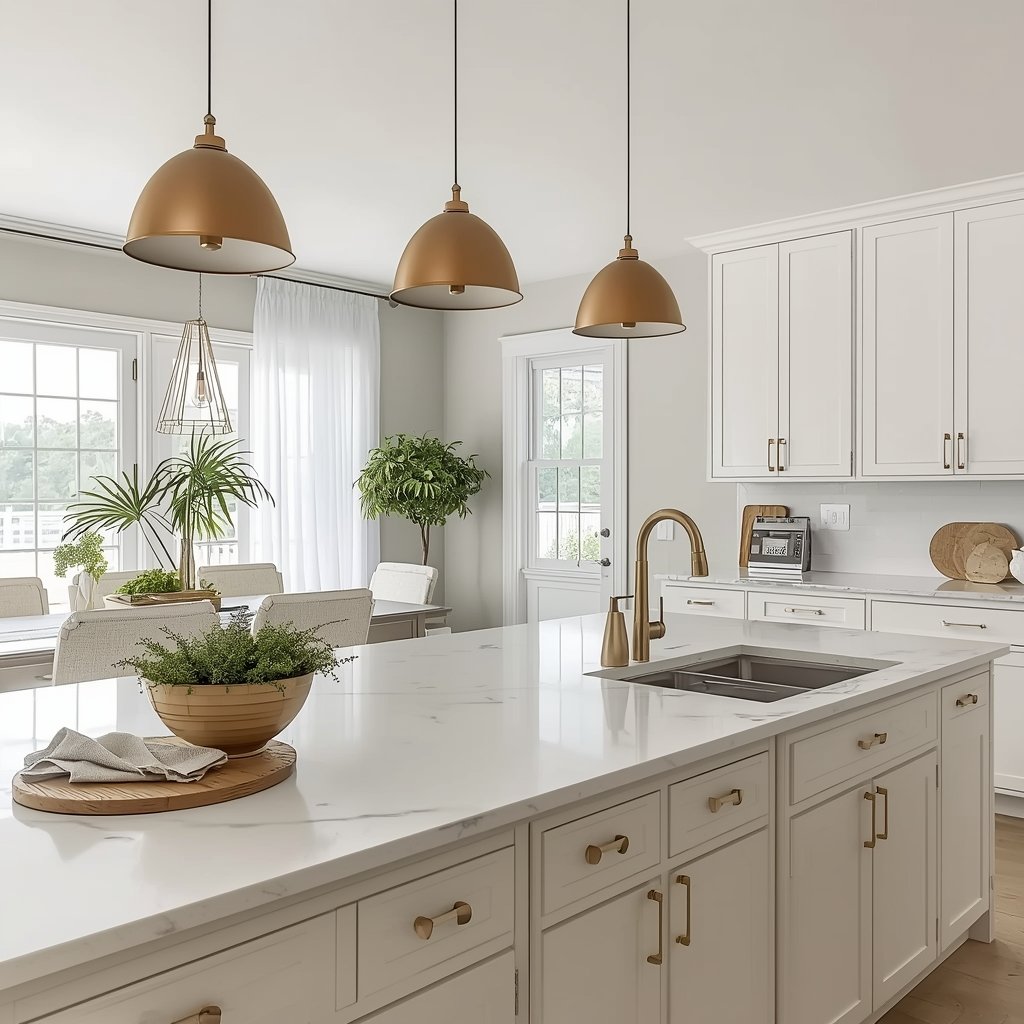
A marble-topped island has a way of making a kitchen feel inherently elegant, but the styling choices around it are what determine whether it feels cold and untouchable or genuinely warm and inviting. The key is layering in natural elements that soften the stone’s formality — fresh greenery, organic textures, unfinished wood, and matte ceramics. This is the style of kitchen you see in European homes, where beautiful materials are expected to coexist with the evidence of real daily life. A marble island does not need to be pristine to be beautiful; in fact, it looks better when it is styled like someone actually cooks and lives and gathers around it.
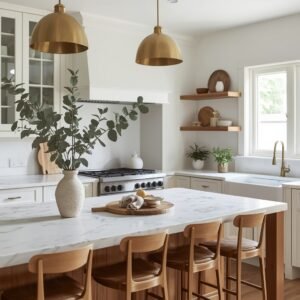
Start with the greenery. A tall, arching stem of eucalyptus or a loose arrangement of fresh herbs in a simple vase adds movement and life to the marble surface in a way that feels immediate and sensory. A small potted plant — a compact olive tree, a trailing pothos, a rosemary topiary — brings the organic world into the kitchen without any fuss. These living elements create a visual softness that marble, with its hard lines and cool surface, genuinely needs. Pair them with a wooden cutting board or serving board leaning casually against the backsplash, and the island instantly feels warmer and more approachable. The contrast between the refined stone and the rough natural textures is exactly where the beauty lives.
For the broader kitchen context, consider pairing a marble island with warm white or soft linen-toned cabinetry rather than a stark brilliant white, which can make the marble feel clinical. Open shelving on the perimeter displaying a collection of simple white or earth-toned ceramics reinforces the natural, gathered aesthetic. Pendant lights in unlacquered brass or raw linen shades cast the whole scene in warmth. If you can, position the island near a window so natural light falls across the stone during the day — the veining in marble is transformed by natural light, taking on a luminous quality that no artificial light source can fully replicate. This is a kitchen that rewards taking the time to sit down and look at it slowly.
9. A Colorful Island That Becomes the Kitchen’s Personality Piece
Most kitchens play it safe with neutral island colors, and there is nothing wrong with that. But when someone makes the decision to paint their island in a genuine, committed color — a terracotta, a dusty sage, a deep ochre, a faded cobalt blue — something shifts. The kitchen stops feeling like a backdrop and starts feeling like a room with a point of view. A colorful island is perhaps the highest-confidence design choice you can make in a kitchen, and when it is done well, it becomes the detail that people remember and that photographs make look effortlessly curated. The secret is choosing a color that feels considered rather than trendy — one that feels like it could have been there for decades.
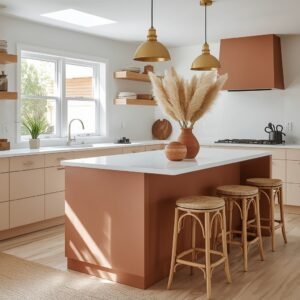
The colors that tend to age best on kitchen islands are those that reference the natural world or traditional historical paint palettes. Dusty sage, muted terracotta, warm clay, faded cornflower blue, deep verdigris green, and soft mustard yellow all have a quality of having been lived with rather than recently chosen. They work because they feel connected to something older and more enduring than current interior trends. Pair your chosen island color with a complementary countertop — a white or cream stone top feels fresh against most colors, while a warm wood top adds richness and coziness. The wall and ceiling color of the broader kitchen also matters: keep them light and neutral so the island can carry the color narrative without the room feeling overwhelming.
For accessories and styling, lean into the specific character of your chosen color. A terracotta island invites warm copper accents, hand-thrown pottery in cream and rust tones, and dried botanicals. A sage green island feels at home with raw brass hardware, simple white ceramics, and fresh herbs. A cobalt blue island looks beautiful against white marble and warm wood, with simple linen accessories keeping things grounded. The bar stools or chairs at the island should either echo the island color softly or stand in neutral contrast — a natural rattan or raw wood stool works with almost anything. Color on the island is only the beginning; it is the styling around it that turns it into a complete and intentional space.
10. The Multi-Level Island That Separates Prep Space From Casual Seating
The split-level or multi-level kitchen island is one of the most functionally intelligent island designs available, and it also happens to look genuinely striking. The concept involves a lower working surface — typically at standard counter height, around thirty-six inches — on the kitchen-facing side, which is where the prep work, cooking, and mess happens. Then, stepped up slightly on the opposite side, a raised bar-height surface creates a natural seating area where people can sit comfortably on tall stools and be part of the kitchen activity without being in the way of it. The level change creates an intuitive psychological boundary: one side is for working, the other is for gathering.
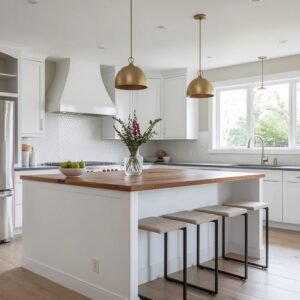
Visually, the split level introduces an architectural interest that a flat island does not have. The step creates a shadow line, a change in plane, and an opportunity to use different materials or finishes on each level if you want to lean into the distinction. A warm butcher block on the prep level and a smooth quartz on the bar-height level creates a beautiful material contrast that reinforces the functional difference between the two surfaces. Alternatively, using the same material throughout but differentiating with color — a painted wood base on the lower prep level and a contrasting stone on the raised top — creates a unified look that still feels layered and intentional.
Lighting a multi-level island well requires thinking about both levels. The upper bar surface typically benefits from pendant lights hung at a height that works for the seated person rather than the standing cook — usually lower and more intimate than standard over-island lighting. Consider a row of smaller pendants at a slightly lower drop to create a sense of enclosure and warmth over the seating area, while leaving the prep side to be handled by recessed task lighting or under-cabinet strips. The result is two distinct moods within one island — one bright and task-focused, one warm and social — which is exactly what a well-lived-in kitchen should feel like at different moments of the day.