There is something quietly beautiful about a small kitchen that has been thoughtfully designed. It whispers intention, creativity, and a kind of resourcefulness that big open kitchens simply cannot replicate. If your kitchen is tiny, this is for you.
1. Go Vertical With Open Shelving
Most small kitchen owners make the same mistake: they think horizontally. They scan the limited counter space, the narrow floor plan, the cramped cabinets, and they sigh. But the walls above your eye line are completely untouched territory. Open shelving that climbs toward the ceiling transforms unused vertical space into something genuinely functional and beautiful. When you go vertical, your kitchen suddenly has breathing room at the counter level while your storage floats gracefully above. It is a design shift that changes how the entire room feels the moment you step inside.
Styling open shelves well is the real secret. Do not simply line them with random cans and plastic containers. Instead, think in layers and textures. Stack creamy white ceramic bowls next to amber glass jars filled with dried pasta or lentils. Tuck a small trailing plant between your cookbooks and your spice collection. The mix of matte, glossy, and organic textures creates visual interest that makes the shelves feel curated rather than cluttered. Stick to a consistent color palette, neutrals with one warm accent tone, so the whole wall reads as intentional rather than chaotic.
Lighting plays a beautifully supportive role here. A thin strip of warm LED lighting tucked under each shelf illuminates your displayed items and casts a gentle amber glow across the kitchen in the evenings. This transforms open shelving from purely functional storage into something that feels almost like a display. When the overhead light is dimmed and only the shelf lights glow, even the smallest kitchen feels like a cozy editorial space. Pair this with matte black or brushed brass shelf brackets for an added design detail that photographs exceptionally well.
2. Use a Light Monochromatic Color Palette
Color is one of the most powerful tools you have in a small kitchen, and using it wrong can make a perfectly decent space feel like a storage closet. The monochromatic approach, choosing one base color and layering different shades and tones of it throughout the kitchen, is one of the smartest moves a small kitchen can make. When the eye does not have to constantly jump between competing colors, it can travel smoothly across the room, and the brain reads that smooth visual journey as spaciousness. It is a subtle psychological trick that works every single time.
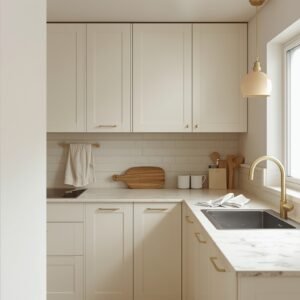
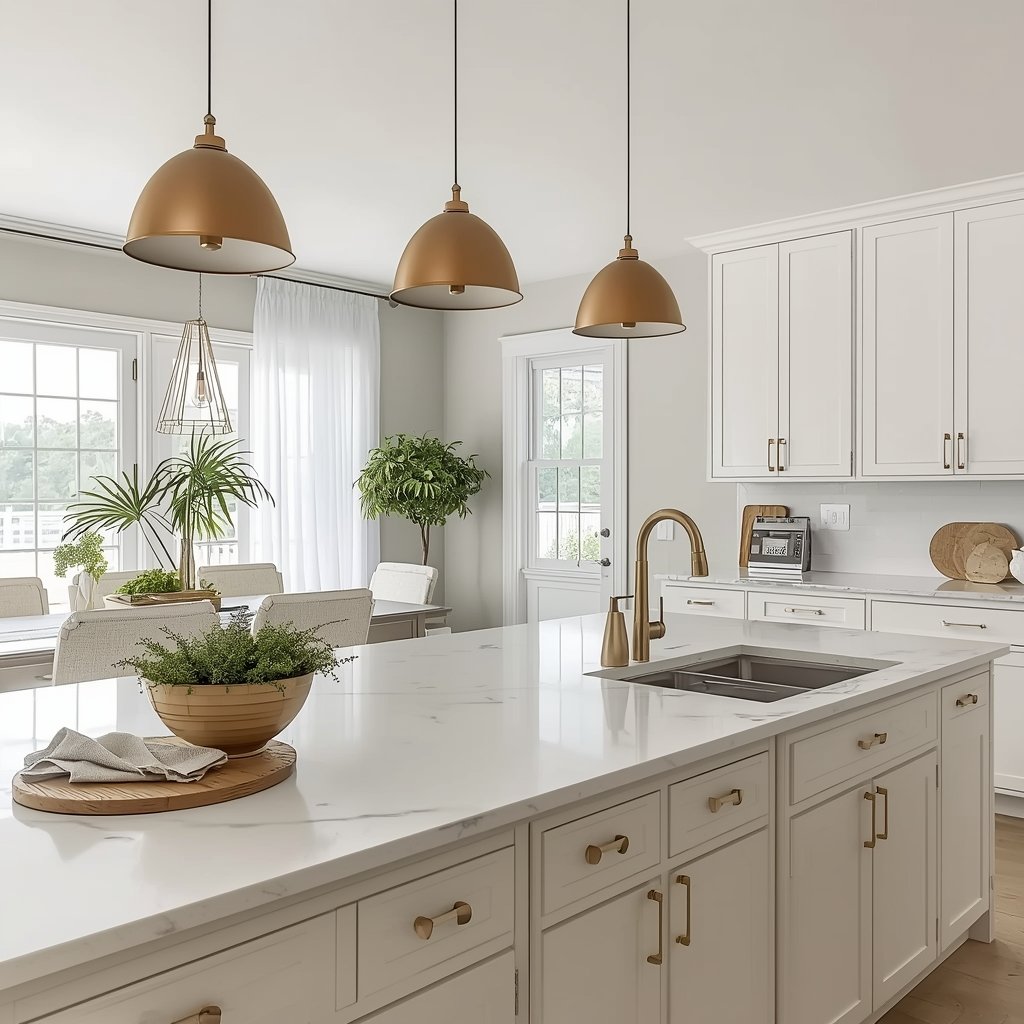
Soft whites, warm creams, and pale sage greens are particularly effective in small kitchens because they reflect light rather than absorbing it. Imagine a kitchen where the lower cabinets are a dusty off-white, the upper walls are the same tone but slightly lighter, the countertop is a warm white marble-look surface, and even the backsplash tiles are a creamy ivory. The only contrast comes through natural wood accents, a cutting board here, a wooden spoon jar there. The result feels airy, collected, and far larger than the actual square footage would suggest. Texture becomes the real star in a monochromatic palette because it is the variation in surface, not color, that keeps things visually interesting.
Where most people stumble with monochromatic kitchens is that they accidentally let things get too flat or clinical. The fix is intentional texture layering. Matte cabinet fronts paired with a glossy subway tile backsplash. A linen dish towel draped over a matte brass hook. A woven basket tucked beneath the counter. Each of these small decisions adds dimension without introducing new colors. Even your lighting choice matters here: warm-toned bulbs (think 2700K) prevent the space from feeling sterile and cold, and instead give the whole palette a softly golden, lived-in warmth that makes the kitchen feel genuinely welcoming.
3. Install a Slim Waterfall Island or Breakfast Bar
One of the most repeated pieces of small kitchen advice is to remove anything unnecessary. And while that is generally sound guidance, it overlooks a category of furniture that actually gives back more than it takes: the slim breakfast bar or narrow waterfall island. A well-proportioned narrow island, even one that is just 18 to 20 inches deep, adds counter workspace, hides clutter below, creates a social zone for morning coffee, and gives the kitchen a pulled-together, intentional look. It is one of those additions that makes a small kitchen feel more complete, not more crowded.
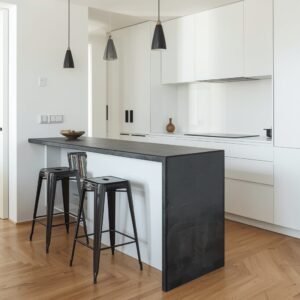
The key is proportion. A breakfast bar that is too deep or too tall will swallow the remaining floor space and make movement feel awkward. Aim for something that sits at standard counter height with two slim barstools that tuck completely underneath when not in use. Barstools with no backs and thin metal legs are ideal because they visually disappear, keeping the floor line clean and open. Choose a waterfall edge in a contrasting material, like a dark slate-effect surface on a white kitchen island, to create a focal point that draws the eye and adds a deliberate design moment to an otherwise simple space.
Underneath the island is some of the most valuable real estate in a small kitchen. Use it wisely. Open shelves on one side can hold cookbooks, a bowl of fruit, or a small basket of kitchen linens. Closed cabinet doors on the other side can hide small appliances that would otherwise clutter the counter. This dual-purpose thinking is what separates a thoughtfully designed small kitchen from one that simply looks small. Pendant lighting hung low over the island, even just one or two slim pendants, anchors the zone and makes it feel like a deliberate, designed destination rather than an afterthought.
4. Embrace Dark and Moody Cabinetry
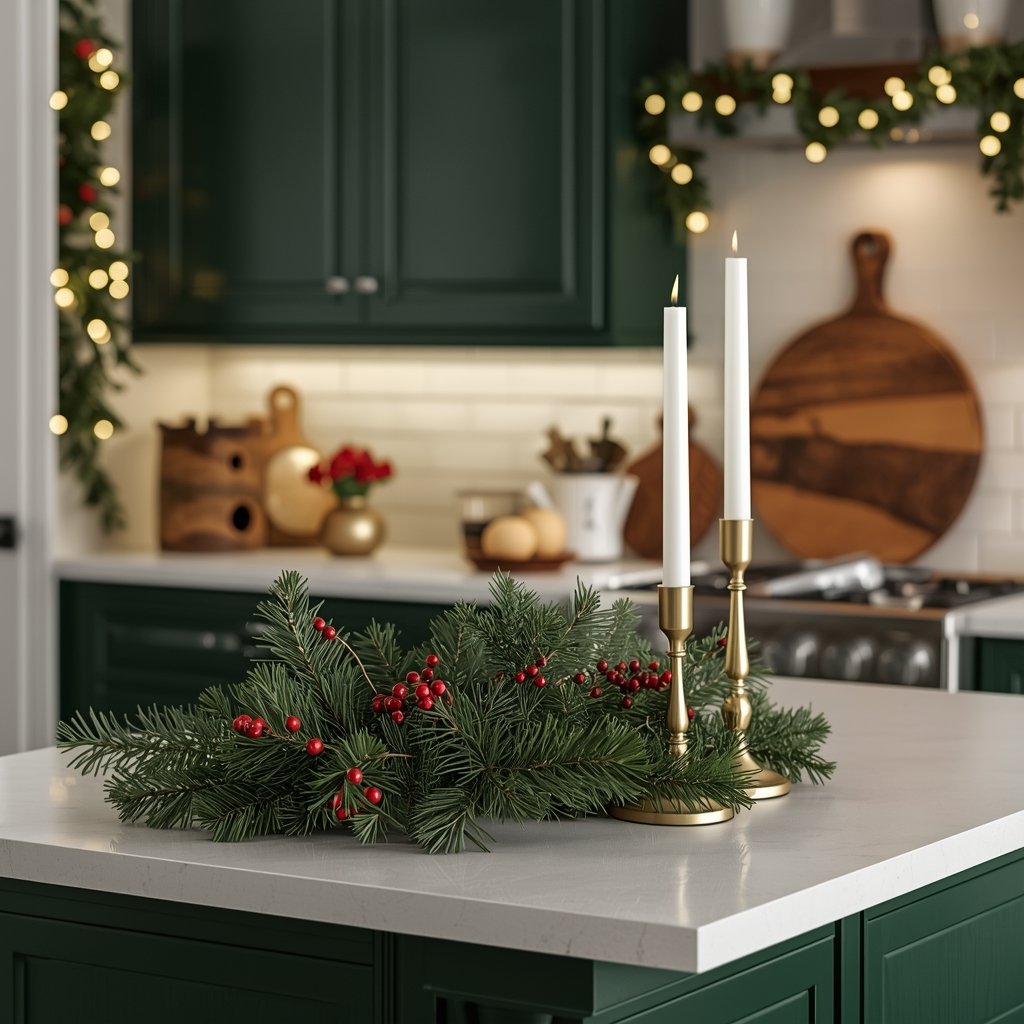
Here is the idea that surprises most people: dark cabinets in a small kitchen are not a mistake. In fact, when used intentionally, deep charcoal, forest green, or midnight navy cabinetry can make a tiny kitchen feel dramatically more sophisticated and purposeful than an all-white version of the same space. The psychology behind this is simple: dark colors create depth. They make the walls appear to recede, which tricks the eye into reading the space as having dimension and layering rather than just four cramped walls with cabinets squeezed in between.
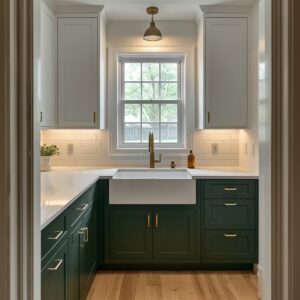
The critical pairing with dark cabinetry in a small kitchen is light countertops and reflective surfaces. A white or pale quartz countertop against deep forest green lower cabinets creates a striking contrast that feels high-end and visually balanced. Add a white tile backsplash with thin grout lines to bounce light around the upper portion of the kitchen. Brass or gold hardware on the dark cabinets pulls the warmth up and prevents the space from feeling cold. This palette, dark base, light top, warm metal accents, is one of the most photogenic combinations a small kitchen can have and has become iconic on design platforms for exactly that reason.
Natural light is your best friend when working with dark cabinetry. If your kitchen has even one window, treat it as the most important design element in the room. Keep it completely unobstructed, no heavy curtains or deep window boxes. Let the light pour in and create a natural contrast between the bright window area and the deeper, moodier cabinet tones. In the evenings, warm-toned under-cabinet lighting picks up this role beautifully, washing the countertops in a honey-gold glow that makes the dark cabinets look rich rather than heavy. A small kitchen with dark cabinets, handled this way, feels like a design choice, not a limitation.
5. Make Your Backsplash the Statement Piece
In a small kitchen, you do not have a lot of surface area to play with when it comes to design moments. The backsplash is often the single largest uninterrupted visual surface in the entire space, and most people treat it like an afterthought. A plain white subway tile is safe, yes. But choosing a backsplash that genuinely draws the eye, something with color, pattern, or texture, turns the most functional surface in the kitchen into its most beautiful one. It is one of the highest-impact changes you can make in a small kitchen without touching the layout at all.
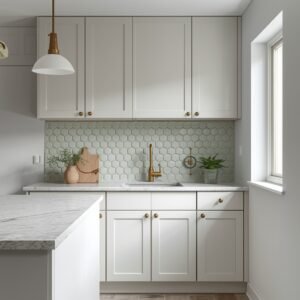
Zellige tiles are having a well-deserved moment in small kitchen design. These handmade Moroccan clay tiles have a naturally uneven, slightly wavy surface that catches light differently throughout the day, giving the backsplash a living, shimmering quality that flat tiles simply cannot replicate. In a creamy white or pale sage colorway, they add texture without introducing a bold color. In a deeper terracotta or midnight blue, they become an unmistakable focal point. Pair them with simple, unpatterned countertops and flat-front cabinets so the tile has room to breathe and be appreciated without competing with too many other design elements.
Pattern tiles, particularly those in geometric or Moroccan-inspired designs, work equally well and add a sense of personality that makes a small kitchen feel like it belongs to someone with genuine design taste. The trick to avoiding overwhelm is scale: choose a tile with a smaller, tighter repeat pattern in a two-tone palette that pulls from the cabinet and countertop colors already present. This creates cohesion rather than chaos. From a lighting standpoint, a well-lit backsplash, whether by natural window light or directed under-cabinet task lighting, will always look like a design decision rather than a space-filling solution.
6. Use Mirrored or Glass Cabinet Fronts
There is a quiet magic to glass in a small kitchen. It does something no paint color or clever shelving arrangement can fully replicate: it creates physical depth where none actually exists. A cabinet with a glass front allows the eye to travel past the door surface and into the cabinet interior, which effectively doubles the perceived depth of that section of the kitchen. When you line an entire row of upper cabinets with glass fronts, the visual effect is genuinely striking. The kitchen feels more open, more layered, and more carefully considered all at once.
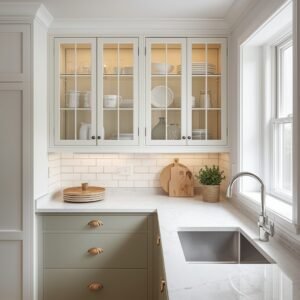
The styling of what sits inside glass-front cabinets matters enormously. This is not the place to store your mismatched plastic containers or the stack of takeout menus you keep meaning to throw away. Treat glass cabinet interiors as mini displays. Stack dishes by size and color. Group glassware by height. Tuck in one or two small decorative objects, a tiny ceramic figure, a folded linen, a small candle, that add personality without looking crowded. A simple, consistent color palette inside the cabinet, all white dishes, all clear glass, or a mix of the two, reads as clean and elegant rather than busy.
For smaller kitchens where full glass-front uppers might feel too revealing, consider using glass only on a select few cabinet doors, perhaps the two directly flanking the range or the ones at the end of a run. This creates the illusion of more space in those key sections while leaving other cabinets closed for practical storage. Frosted or reeded glass is a beautiful middle-ground option: it allows light to pass through and implies depth without exposing every item stored inside. Under-cabinet lighting directed into glass-front cabinets in the evening turns them into softly glowing display cases that make the kitchen feel warm and curated.
7. Bring in Natural Wood to Add Warmth and Depth
A small kitchen that is entirely made up of painted surfaces and manufactured materials can start to feel flat and a little lifeless, regardless of how well-planned the layout is. Natural wood is the antidote. It introduces organic variation, warmth, and a sense of texture that no paint color alone can achieve. Even a single wood element in a small kitchen changes the entire feel of the space, pulling it away from the sterile and toward the genuinely livable. And the beauty of wood is that it works with nearly every palette and style, from Scandinavian minimal to French country to modern farmhouse.
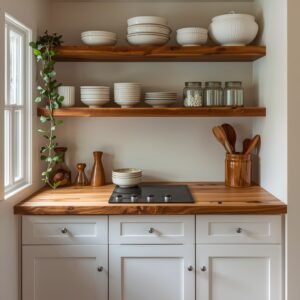
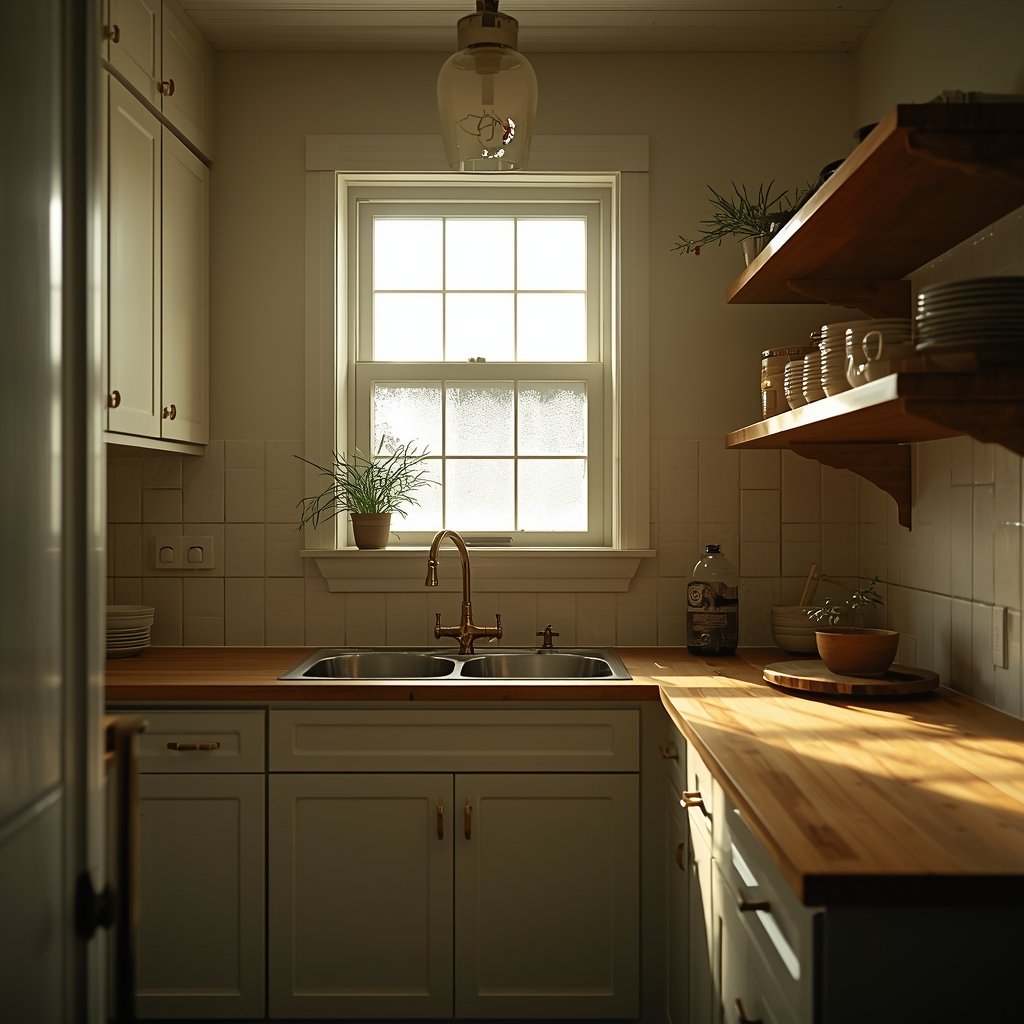
The most impactful places to introduce natural wood in a small kitchen are the countertops, the floating shelves, and the ceiling if the kitchen has exposed beams or the option to add them. A butcher block countertop in a warm honey or rich walnut tone brings immediate life to an otherwise minimal kitchen. It invites touch, improves with age, and photographs with extraordinary warmth. Open shelves in matching or complementary wood tones connect the countertop to the wall and create a visual thread of natural material that gives the kitchen a layered, designed quality without requiring a single piece of furniture.
Smaller wood accents matter too, perhaps more than people realize. A wooden knife block on the counter. A bamboo dish drying rack. A set of matching wood-handled utensils in a ceramic crock. These objects are functional but they also act as the connective tissue between the larger wood elements in the room. Together they build a cohesive story of warmth and natural material that makes the kitchen feel designed from the inside out rather than styled on the surface. Pair these wood tones with linen, cotton, and ceramic to complete the layered, tactile quality that makes a small kitchen feel genuinely inviting.
8. Add a Pegboard or Magnetic Wall for Functional Display
The challenge in a small kitchen is always the same: you need everything accessible, but counter space is limited and cabinet doors feel endless. A pegboard wall or a full magnetic knife and utensil strip changes the entire equation. It takes what would normally be drawer or cabinet contents and lifts them into vertical, visible, beautifully organized display. When done with intention, a styled pegboard is not just a storage solution. It is genuinely one of the most visually interesting features a small kitchen can have, the kind of thing that makes visitors stop and say, that is such a good idea.
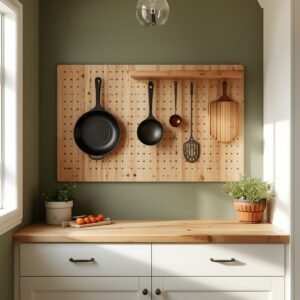
Styling a pegboard well requires the same eye you would bring to open shelving. Start with a consistent finish: either all-black hooks and accessories for a modern graphic look, or natural wood and brass accents for a warmer, more artisan feel. Hang your most-used and most beautiful tools: a cast iron skillet, a set of matching ladles, a wooden cutting board. Tuck in a small shelf for a potted herb or a tiny ceramic dish to hold salt. The pegboard works best when it is not completely packed. Leave breathing room between items so each piece has presence and the overall arrangement reads as intentional rather than overcrowded.
The wall color behind the pegboard matters significantly. A pegboard mounted against a deep accent color, a terracotta, a soft dusty blue, or a warm sage, turns the entire arrangement into a focal wall that commands attention. This gives your small kitchen a clear design center of gravity, a point that anchors the space and draws the eye immediately upon entering. From a practical standpoint, this style of storage means your most-used tools are always exactly where you need them, no opening drawers or digging through cabinets. It is a design solution where form and function are genuinely equal partners.
9. Maximize Under-Sink and Corner Storage With Inserts
The most wasted space in almost every small kitchen comes in two forms: the dark, awkward cabinet under the sink and the impossible dead zone of a corner cabinet. Most people shove things in, shut the door, and try not to think about it. But these two storage areas, properly fitted with the right inserts and organizers, can hold an extraordinary volume of kitchen supplies in a completely accessible way. Maximizing them is not glamorous work, but the payoff in daily livability and the cascading effect it has on the rest of the kitchen, freeing counter space, reducing visual clutter, is enormous.
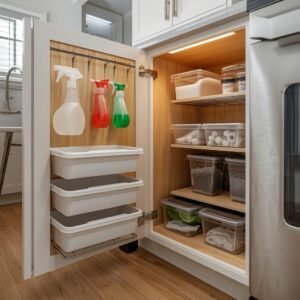
Under-sink organization begins with acknowledging the awkward plumbing that runs through the space. Slim pull-out drawers that fit around pipes, stackable bins with open fronts, and tension-rod dividers for hanging spray bottles are all tools that work with the constraints rather than ignoring them. A simple coat of white paint on the interior of the cabinet before you install anything makes the space feel brighter and cleaner from the moment you open the door. Add a small battery-powered LED strip inside for visibility. These small interior upgrades are invisible from outside the cabinet but make a profound difference in how much you actually use and enjoy the space.
Lazy Susans in corner cabinets are the classic solution, and they remain popular because they genuinely work. But the newer generation of pull-out corner drawers, those that swing out on articulated hardware and bring the back of the cabinet forward to meet you, are even more effective. Whichever system you choose, pair it with consistent container shapes: matching clear bins, uniform jar sizes, or stacking organizers that use the full height of the cabinet interior. When every inch of a small kitchen is doing its job, the countertops stay clear, the kitchen stays calm, and the overall space genuinely feels larger than it is.
10. Layer Lighting for Ambiance and Function
Most small kitchens are lit by a single overhead fixture, and it shows. One light source from above casts flat, often unflattering light that flattens the space, throws shadows into corners, and makes the kitchen feel more like a utility room than a living space. Layered lighting, meaning the combination of ambient, task, and accent light sources working together, is one of the single most transformative upgrades a small kitchen can receive. It costs far less than a renovation and delivers a result that changes how the kitchen looks and feels at every hour of the day.
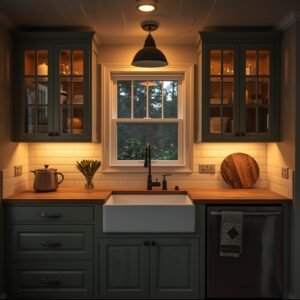
Ambient lighting is the base layer: a ceiling fixture, a flush mount, or a small chandelier that fills the room with overall light. Task lighting is the second layer: under-cabinet LED strips that illuminate the countertop surface directly where you chop, prep, and cook. These are non-negotiable in a small kitchen where counter space is already limited and good visibility is essential. The third layer is accent lighting: a pendant over the sink, a small lamp on a shelf, or the warm glow of lit glass-front cabinets. Each layer serves a purpose, and together they allow you to shift the mood of the kitchen from bright and functional during the day to warm and atmospheric in the evening.
The fixtures themselves are an opportunity for design expression that is often overlooked in small kitchens. A single statement pendant over the sink in a warm brass or matte black finish acts as jewelry for the space, a small object that carries significant visual weight and gives the kitchen a finished, intentional quality. Even in a very small kitchen, the right light fixture signals that someone cared about the design of this room, that every detail was considered. Choose bulbs consistently across all fixtures, warm white at 2700K is ideal for kitchens, and your layered lighting scheme will feel cohesive, beautiful, and genuinely livable from morning to night.