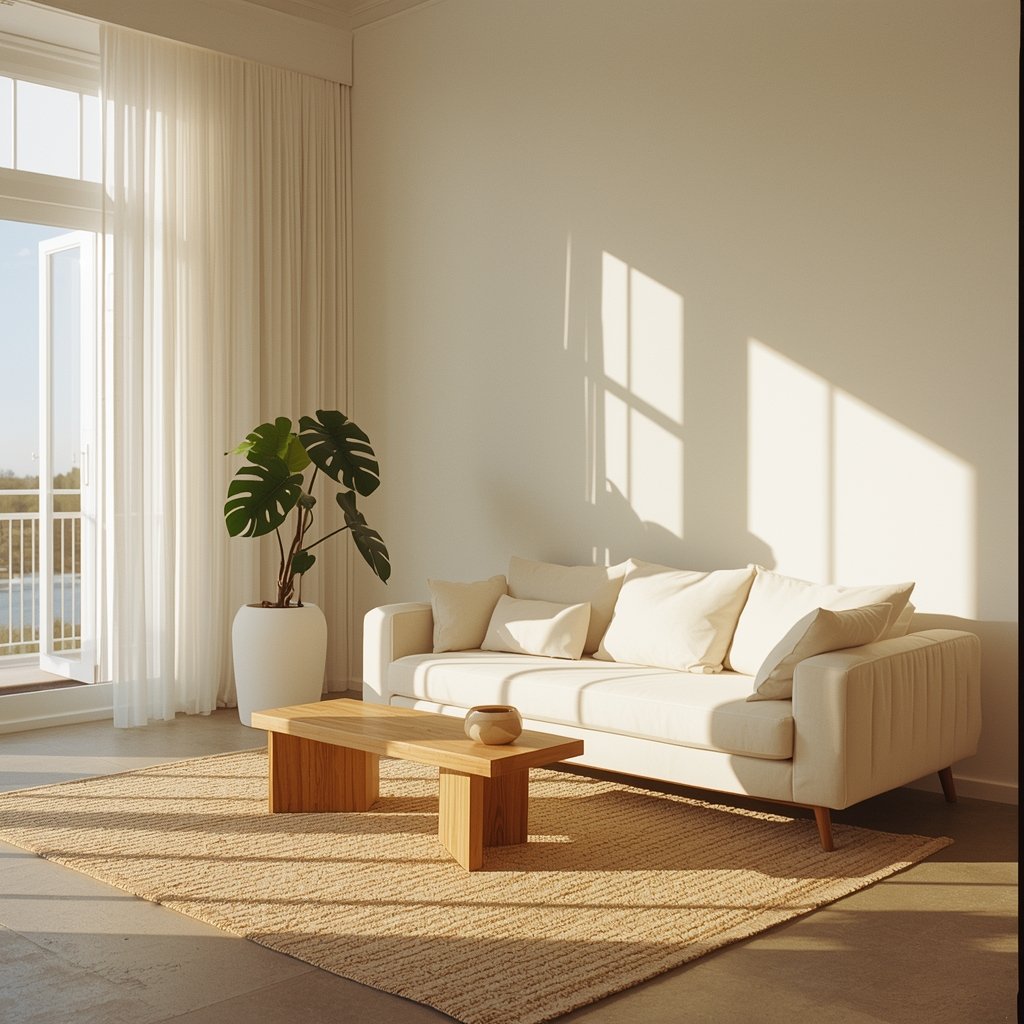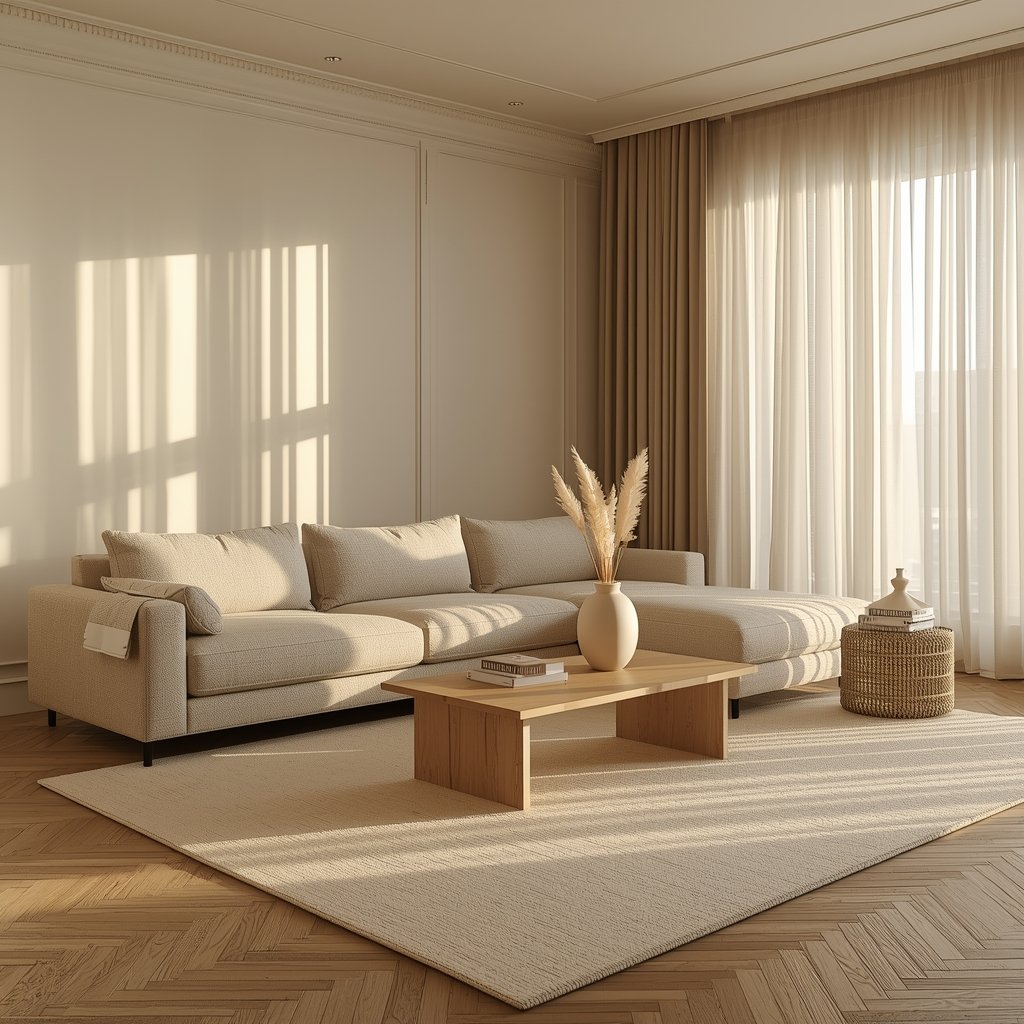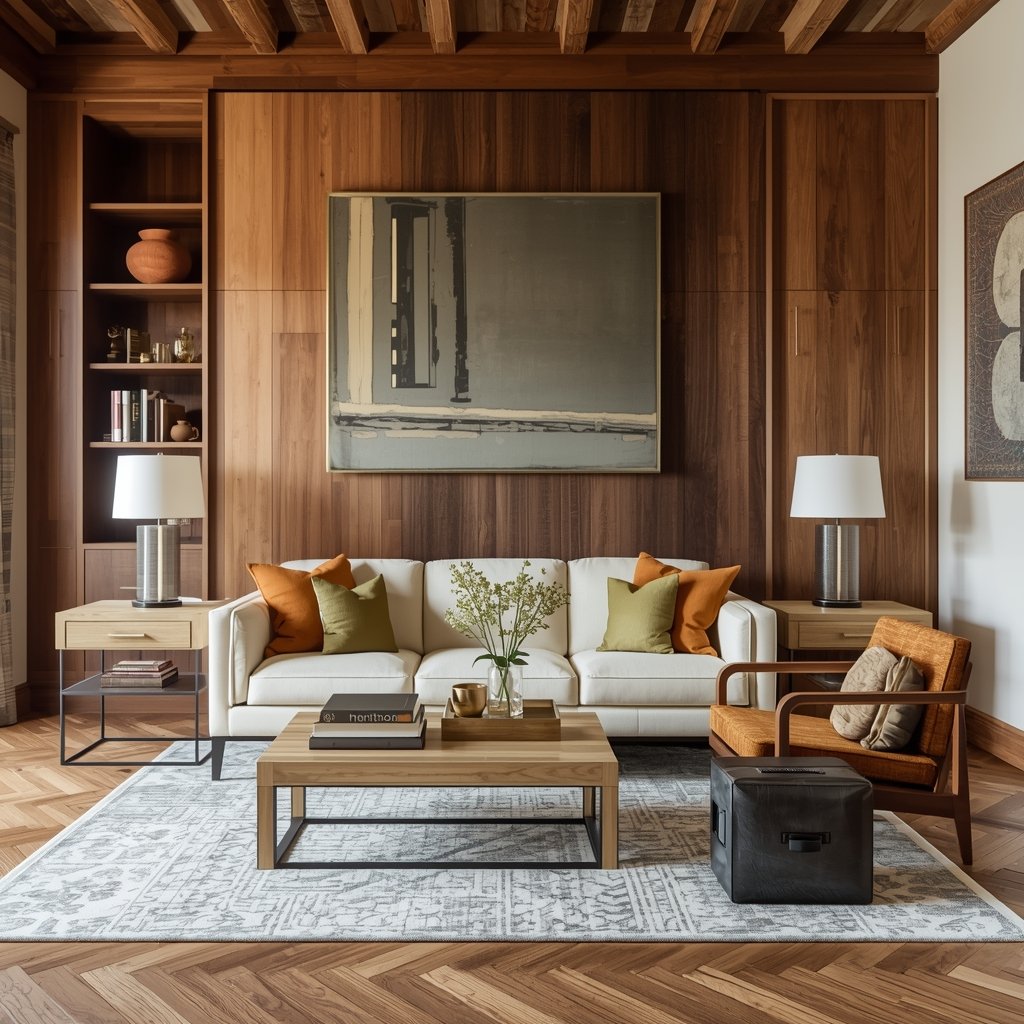
There is something quietly magnetic about a living room that feels like a deep breath — warm, grounded, and genuinely inviting. Natural living rooms are having a long-overdue moment, and honestly, it makes perfect sense. After years of cold minimalism and stark whites, people are craving spaces that feel like they actually belong to someone.
1. The Linen and Clay Foundation
If you want a natural living room that feels effortlessly pulled together, start with your base layers. Linen sofas in oat, sand, or warm white are the single best investment you can make. They do the heavy lifting aesthetically — soft enough to feel welcoming, neutral enough to work with almost any accent palette. Pair the sofa with a clay or terracotta-toned wall, even just one accent wall, and the room immediately shifts from “nice” to genuinely warm. The trick here is to avoid going too matchy-matchy. Choose a clay tone that is slightly deeper than your sofa so there is contrast, but keep both within the same warm undertone family. Jute or sisal rugs work beautifully underfoot, adding organic texture right from the floor up.

Layer in cushions in rust, dusty sage, and warm taupe — mix different fabric weights like cotton velvet, woven linen, and brushed cotton together for richness. The goal is a collected, lived-in look, not a showroom. Add a low-profile raw wood or travertine coffee table to ground the space. For lighting, opt for a statement rattan pendant overhead and a warm-toned floor lamp in the corner. Edison bulbs or filament bulbs at 2700K are ideal — they cast that honey-gold light that makes everything feel softer. In the evening especially, this kind of room just glows.
2. Warm Wood Tones Everywhere
Do not be afraid of wood. This is probably the most underused advice in natural interior design — people use one wood-toned piece and stop there. The real magic happens when you layer multiple wood tones across different pieces and let them create a quiet rhythm throughout the room. Think a walnut media console, an ash wood side table, and a reclaimed pine shelf all living together. They do not need to match. They just need to share that same warm, golden-brown undertone family. Mix matte and natural-oiled finishes rather than lacquered or glossy ones — they feel more authentic and age beautifully over time.

Anchor the whole palette with a cream or warm white sofa, and then bring in deep forest green or warm olive through soft furnishings. This combination — wood tones plus earthy greens — is endlessly satisfying to the eye because it mirrors the natural world so closely. Add a wooden ladder shelf against one wall displaying a mix of books, trailing plants, and handmade ceramics. For the floor, wide-plank oak or pine flooring in a natural or light-honey stain is the dream. If you have carpet or tile, a large wool rug in a natural undyed tone can bring in the same warmth. Let the wood do the work — it is texture, color, and material all at once.
3. Earthy Greens and Botanical Layers
Plants are non-negotiable in a natural living room — not as afterthoughts, but as actual design elements with intention behind their placement. The key is variety: vary the height, the leaf size, the pot material, and the placement. A large fiddle leaf fig or olive tree in a matte terracotta pot creates an anchor point in one corner. Mid-level plants like rubber plants, monstera, or Bird of Paradise on a rattan or wood plant stand bring in that mid-height interest. Then trail smaller plants like pothos or string of pearls from shelves or mantels downward. This layered greenery approach turns your living room into something that feels genuinely alive.

The earthy green of the plants pairs beautifully against warm neutral walls — think warm greige, sandy beige, or that soft mushroom tone that is neither too gray nor too brown. For soft furnishings, pull in dusty sage and muted olive through cushions and a throw blanket to echo the plant palette without repeating it exactly. Botanical-print linen cushions or a vintage-inspired nature print as a framed art piece ties the organic theme together intellectually as well as visually. Keep your planters cohesive — stick to terracotta, unglazed ceramic, and woven baskets and avoid plastic pots wherever possible. The material of the pot matters as much as the plant itself.
4. Textured Neutral Walls with Natural Plaster Finish
The wall is your largest surface and in natural living rooms, it deserves far more attention than a coat of flat paint. Textured wall finishes — particularly Venetian plaster, limewash paint, or microcement — are transformational. They catch the light differently throughout the day, casting subtle shadows that give the room an organic, handcrafted quality that flat paint simply cannot replicate. Limewash in particular has a beautiful mottled, slightly uneven quality that looks like aged Italian villas. Pair it with warm off-white or greige tones and the entire room immediately looks more expensive and more intentional. This is one of those changes that people notice but cannot quite name.
You do not even necessarily need to do all four walls. A single limewash or plaster-finished feature wall behind the sofa area creates a stunning backdrop with relatively low commitment. Against this textured wall, hang a collection of natural-fiber woven wall art — macrame, palm-weave panels, or a simple linen textile piece. Keep the other walls in a complementary warm white or warm greige so the feature wall sings. Pair with a warm terracotta or sand-toned sofa and the combination is striking. The layering of a textured wall with textured soft furnishings and natural materials creates a room that feels deeply considered and cohesive.
5. Low-Profile Furniture for a Grounded, Zen Feel
There is a reason low-slung furniture feels instantly calming — it lowers your visual center of gravity and makes the room feel more spacious and serene at the same time. Japanese wabi-sabi interiors and Scandinavian naturalism both embrace this principle deeply, and it translates beautifully to a natural living room aesthetic. A low-profile sofa in warm linen or bouclé, paired with a platform-style coffee table in travertine or raw wood, creates a look that is both contemporary and quietly earthy. The furniture does not compete with the architecture of the room — it simply settles into it.
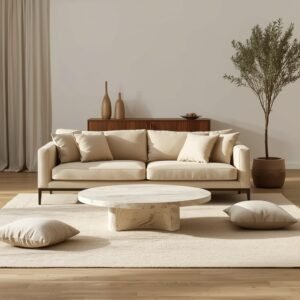
Layer in floor cushions and low pouffes in natural leather, woven jute, or undyed cotton for flexible seating that doubles as texture. A low media console in warm walnut or white oak keeps the horizontal lines clean and uncluttered. The key styling principle with low furniture is to then bring vertical interest elsewhere — through tall plants, a floor lamp with a long neck, or a gallery wall that draws the eye upward. This push-pull between the horizontal and vertical creates visual balance. Keep decorative objects on coffee tables minimal and grounded — a single sculptural candle holder, a stone or concrete bowl, a small stack of books with a plant cutting on top.
6. Terracotta and Rust Accents Against Cream
Terracotta is having its full moment and rightfully so. It is one of those colors that ages beautifully in a space — the more you layer it, the richer it feels. The trick is not to make it the dominant color but to use it as the warmth-giver against a cooler or more neutral backdrop. A cream or warm white sofa is the perfect canvas. From there, bring in terracotta through cushions, a throw, a ceramic vase, and perhaps a rust-toned abstract print on the wall. These touches of terracotta and rust create a color story that feels deeply grounded and connected to the earth without feeling heavy.
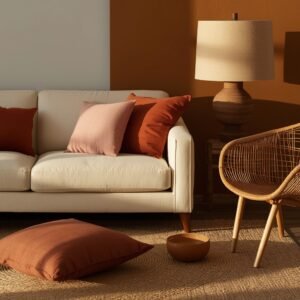
The supporting palette matters a great deal here. Dusty pink, warm sage, and soft tan all work beautifully alongside terracotta without fighting it. Avoid pairing it with cool grays or bright whites — both flatten its warmth and strip out its earthiness. Instead, keep your neutrals warm-toned: linen white, aged cream, warm beige. For furniture, natural rattan chairs alongside the cream sofa add texture while keeping the palette cohesive. Throw in a terracotta-toned ceramic table lamp with a linen shade on a side table and it brings the eye around the room naturally. At night, with the lamp on and candles lit in earthenware holders, this room feels like pure warmth.
7. Cozy Reading Nook Corner with Natural Materials
Every beautiful natural living room deserves at least one corner that is purely about comfort and stillness. A reading nook styled with intention is one of the most pinnable, most craved spaces in home design — and it is genuinely achievable without a renovation. The starting point is a deep, comfortable armchair in a natural fabric: think bouclé in warm white, oatmeal linen, or even a warm camel leather for something more structured. Position it near a window if at all possible to catch natural daylight, and angle it slightly inward toward the room rather than straight against the wall so it feels intentional rather than pushed aside.

Layer the chair with a generously sized chunky knit or linen throw in warm ivory or soft clay. Add a tall arc floor lamp that arches over the chair — brass or matte black finishes work well and feel elevated. A small side table or even a stack of raw wood rounds beside the chair is all you need for your coffee, your book, and a small plant or candle. Mount a simple floating shelf at eye height above or beside the nook and style it with three to five objects: a trailing plant, a candle, a small framed print, and a couple of book spines facing out. This corner becomes the soul of the room — the place everyone actually wants to sit.
8. Woven Textures and Handmade Craft Elements
One of the defining qualities of a natural living room that feels genuinely warm rather than just styled is the presence of handmade and hand-woven elements. These are the things that catch your eye and make you lean in — a macrame wall piece with intricate knotting, a hand-thrown ceramic vase with visible fingerprint marks, a basket woven from seagrass sitting on the floor beside the sofa. These objects carry a sense of human craft and time that mass-produced decor simply cannot replicate. You do not need many of them — even two or three well-placed handmade pieces will shift the entire energy of a room.

Build your woven texture story across different scales. A large area rug with a bold hand-knotted pattern in cream and sand is the foundation. On the sofa, woven cushion covers in natural tones add mid-level texture. Then bring it up to the walls with a woven wall hanging or a small gallery of framed textile art. Seagrass baskets in varying sizes grouped in a corner or under the coffee table serve double duty as storage and styling. Rattan lamp shades over pendant lights or table lamps diffuse light beautifully and add another layer of organic material. The overall effect is a room that looks curated but feels lived-in — full of character and warmth.
9. Stone, Concrete, and Raw Material Accents
Bringing raw materials into a natural living room is one of the most effective ways to give it a sense of authenticity and permanence. Travertine, limestone, raw concrete, and natural stone do not just look beautiful — they communicate that this space is built on real materials, not surface-level styling. A travertine coffee table is perhaps the single most impactful raw material piece you can invest in. It is heavy and sculptural by nature, and it grounds the room in a way that wood or glass simply does not. Pair it with a warm linen or boucle sofa and the contrast of soft fabric against cool stone is quietly striking.

Beyond the coffee table, bring raw materials in through smaller accents. A concrete or stone candle holder, a marble or travertine tray on the coffee table, a raw slate or limestone tile coaster set — these small touches add up to a material story that feels considered. For walls, a partial stone or limewash plaster treatment on a fireplace surround or a single alcove brings in even more raw material depth. Keep the surrounding palette soft and warm so the stone reads as grounding rather than cold. Warm lighting is especially important here — a stone surface lit with warm filament bulbs or candlelight glows in the most beautiful way and transforms the material entirely.
10. Golden Light and Candlelit Warmth as a Styling Tool
Here is something people consistently overlook when designing a natural living room: light is not just functional — it is one of the most powerful styling tools you have. The difference between a room that looks warm and a room that actually feels warm often comes entirely down to the light sources you choose and how you layer them. A natural living room should never rely on a single overhead light. Instead, build a layered lighting plan: a warm ambient pendant or ceiling fixture, a floor lamp in one corner, a table lamp on the side table, and then candles scattered throughout as the evening-hour layer. Together, these create pockets of warmth that transform the room completely after dark.

For bulbs, always choose warm-toned LEDs at 2700K or below — they replicate the golden quality of incandescent light without the heat. Rattan, linen, and bamboo lamp shades all diffuse light softly and add yet another layer of natural material. Then lean into candles with genuine commitment — cluster three to five pillar candles in varying heights on a wooden tray on the coffee table. Use earthenware or concrete candle holders for a natural material connection. Beeswax candles have a particularly warm, honey-golden quality that no artificial light can quite match. When the overhead light is dimmed and the candles are lit alongside a warm floor lamp, a natural living room stops being a designed space and starts being a feeling.