There is something quietly exciting about standing in a room that feels completely, unmistakably yours. Not a showroom. Not a Pinterest board brought to life by someone else’s hands. Yours. As 2026 unfolds, home decor is leaning into that feeling harder than ever — warmth over perfection, intention over trend-chasing, and beauty that actually lives with you.
01. Limewash and Plaster-Effect Walls That Actually Feel Like Home
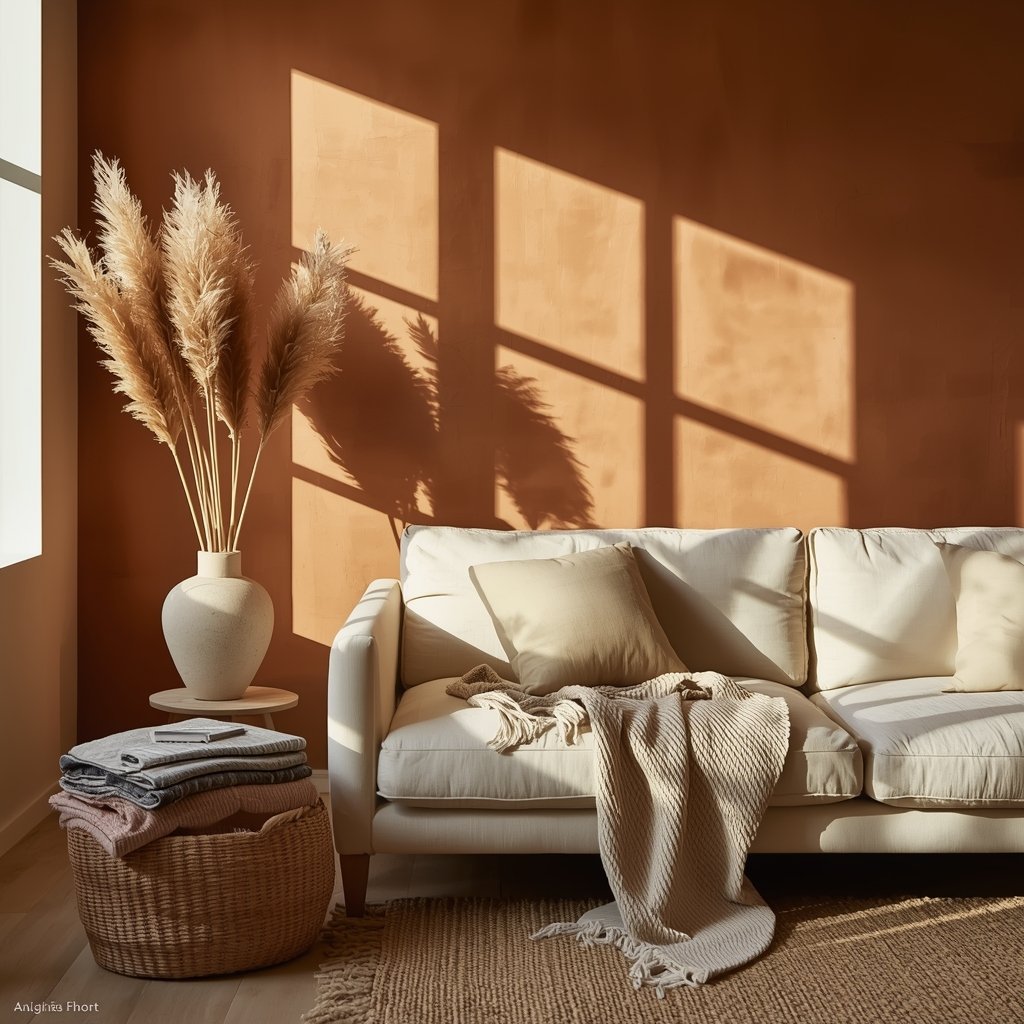
If there is one backdrop trend that refuses to slow down in 2026, it is the textured wall. But we are not talking about bold wallpaper or paint-by-committee neutrals. Limewash and plaster-effect finishes have taken over interior design conversations for a reason — they bring a depth and imperfection to walls that flat paint simply cannot replicate. The finish catches light differently at every hour of the day, making your walls feel almost alive. In morning light, a limewash wall in warm white looks airy and fresh. By evening, those same walls take on a golden, cave-like warmth that makes a room feel like an exhale.
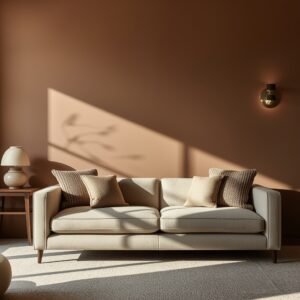
The best color directions for limewash in 2026 are leaning earthy and organic — think raw umber, aged terracotta, dusty sage, and pale clay. These tones pair beautifully with natural linen furniture, dark walnut shelving, and oil-rubbed bronze hardware. The key is restraint: choose one limewash accent wall and let it breathe. Surround it with simple, intentional furniture rather than competing patterns. A low-profile sofa in a warm oat or camel tone will anchor the room without pulling attention away from the wall’s natural texture and movement.
Lighting is everything with a limewash wall. Side-mounted sconces and floor lamps with warm-toned bulbs (think 2700K) will emphasize those gorgeous depth variations. Avoid overhead recessed lighting as your primary source — it flattens the texture and defeats the purpose. Instead, layer your lighting: a table lamp here, a wall sconce there, and if you are feeling ambitious, a low-hanging pendant in aged brass. The result is a room that feels handcrafted, grounded, and deeply personal — the kind of space that makes guests stop and ask, “What is your wall finish?”
02. Curved Furniture That Softens Every Corner
Straight lines had their moment, and they will always have a place — but 2026 is deeply invested in curves. Curved sofas, arched mirrors, round ottomans, and kidney-shaped coffee tables are showing up everywhere, and for good reason. They make rooms feel kinder. More human. There is something instinctively comforting about furniture with no harsh edges — it invites you to slow down, sink in, and stay a while. A curved sofa in a living room does not just add visual softness; it actually changes how people gather in the space. Conversations feel more natural. The room feels more like a living thing than a catalog spread.
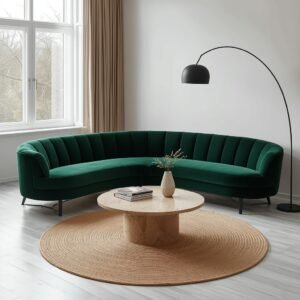
When choosing curved furniture, pay attention to scale. An oversized curved sectional in a small room can feel swallowing, while a smaller curved loveseat in a large open-plan space might feel lost. The sweet spot is a piece that fills about two-thirds of the wall behind it. For color, 2026 is favoring deep, saturated tones for curved pieces — forest green velvet, cognac leather, dusty plum bouclé, and warm caramel boucle. These colors make the curves even more sensual and intentional. Pair with a round rug underneath to echo the shape language and create visual cohesion.
The surrounding decor should play supporting roles. Avoid competing organic shapes — too many curves in one space can feel chaotic. Balance a curved sofa with a rectangular coffee table in marble or travertine, a tall square-edged bookcase, or clean-lined floating shelves. For lighting, a sculptural arc floor lamp sweeping over one end of the sofa creates both function and drama. It frames the curved piece beautifully and adds that editorial quality that makes a room look intentionally designed rather than accidentally assembled.
03. Sculptural Lighting That Does the Heavy Lifting
Light fixtures used to be an afterthought — something you picked to match the finish of your door handles and promptly forgot about. Not anymore. In 2026, lighting is decor. A sculptural pendant lamp can anchor a dining space, define a reading nook, or completely transform the mood of an entryway. And the shapes getting the most attention this year are organic, imperfect, and artisan-made. Think rattan pendants with irregular weaves, blown glass orbs in amber and smoke, hand-forged iron cage lights, and linen drum shades in muted earth tones.
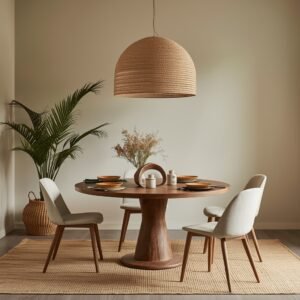
What makes sculptural lighting work so well is that it draws the eye upward and gives the room a sense of architecture, even in spaces that lack interesting ceilings. A single statement pendant over a round dining table communicates that this room was designed with intention. For living rooms, consider a cluster of three pendants hung at varying heights — a technique that adds visual rhythm without requiring expensive renovation. In bedrooms, oversized bedside sconces with a slightly industrial or artisan quality replace table lamps and free up precious nightstand space while adding a boutique-hotel quality to the room.
Color temperature matters enormously with sculptural fixtures. Warm white (2700K–3000K) bulbs bring out the beauty of natural materials like rattan, linen, and brass. Cooler bulbs flatten the mood and make artisan fixtures look institutional rather than inviting. Always choose dimmable options — the ability to dial down the light in the evening transforms a room from functional to atmospheric. Pair sculptural ceiling lights with softer secondary sources like table lamps and candles so the room has layered warmth rather than one harsh focal point.
04. Vintage and Antique Mirrors as Statement Pieces
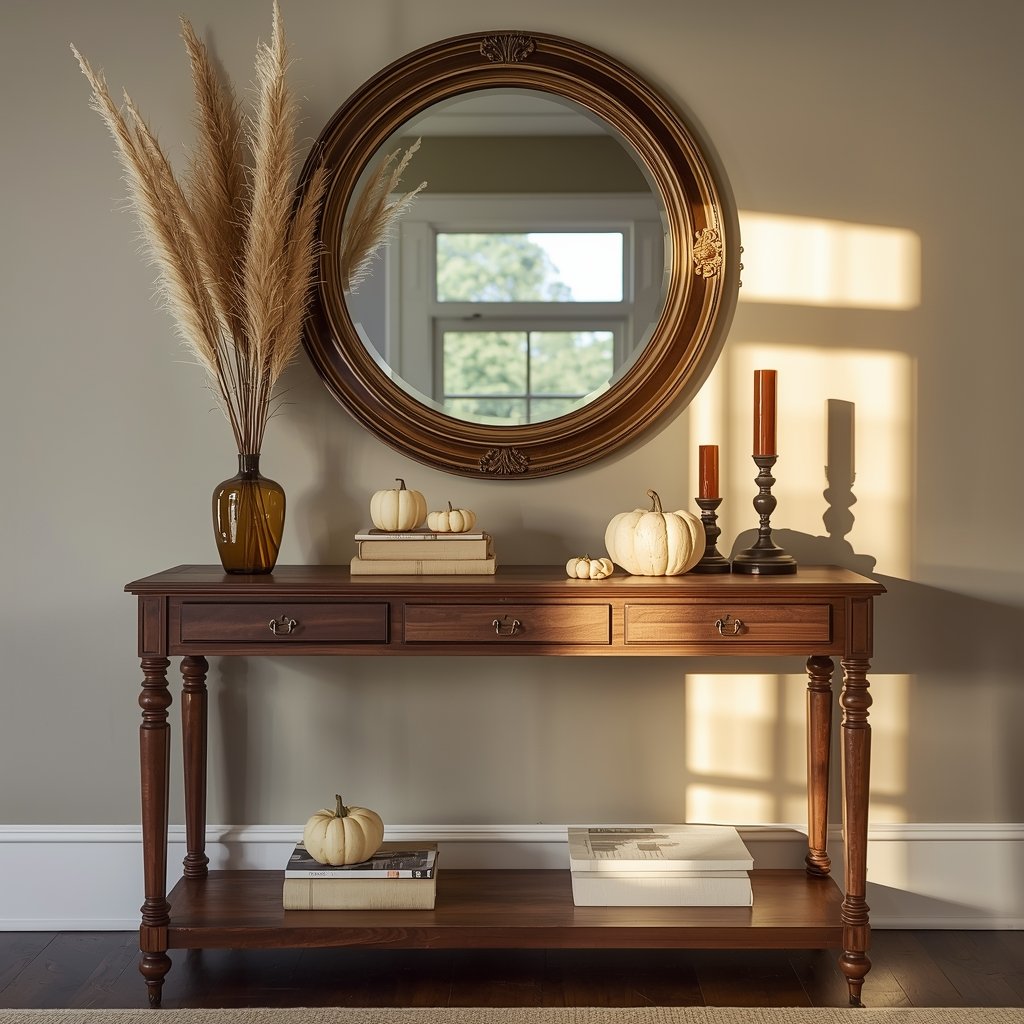
Mirrors are one of those decor tools that designers have relied on for centuries, and they are absolutely having a resurgence in 2026 — but not the frameless, modern, minimalist variety. The mirrors generating the most excitement right now are vintage and antique-inspired pieces with ornate frames, foxed glass, arched silhouettes, and aged gold or oxidized iron finishes. These mirrors do not just reflect light and space; they tell a story. They add the kind of history and personality to a room that no flat-pack furniture can replicate.
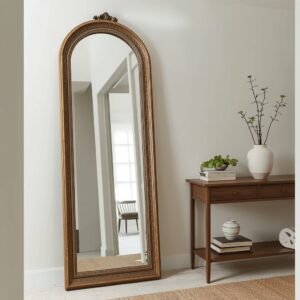
An arched vintage mirror above a console table in an entryway is a pairing that will never go out of style, but in 2026 it feels especially fresh when the console is kept minimal and the surrounding wall is left intentionally bare. Let the mirror be the moment. In living rooms, leaning a large ornate mirror against the wall rather than hanging it creates an effortless, lived-in quality — as though it has been collected over time rather than bought as a matching set. The reflection it offers also brings outdoor greenery or warm lamplight into the composition in unexpected ways.
For bedroom styling, a full-length vintage mirror with a gilded or distressed wood frame leaning in a corner adds both function and drama. Style the floor around its base with a small stack of linen-covered books, a trailing plant, and a simple candle cluster to create a vignette that photographs beautifully and feels curated without trying too hard. When mixing vintage mirrors with modern interiors, the contrast is actually the point — the aged patina of an antique mirror against a crisp white or concrete wall creates a tension that makes both elements more interesting.
05. Organic Textiles and Handwoven Throw Blankets
There is a reason handwoven textiles feel so different from machine-made alternatives — you can actually sense the human touch in them. In 2026, the move toward organic, handcrafted textiles in home decor is not just an aesthetic preference; it is almost a philosophy. Chunky hand-knit throws, loosely woven cotton blankets in natural undyed hues, and linen cushions with raw hemmed edges are showing up in the most beautiful interiors because they bring warmth and texture that no smooth, synthetic fabric can replicate. They also layer beautifully, which is a skill worth mastering.
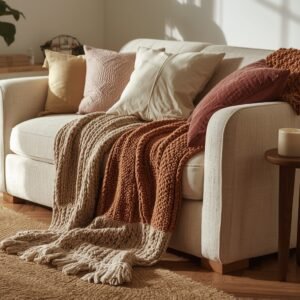
The art of textile layering is really about creating visual and tactile contrast. Start with a fitted linen sofa cover or a bouclé upholstered sofa as your base layer. Then add a cotton throw folded loosely over one armrest — not symmetrically, but casually, as if it was just used and set down. Stack two to three cushions in varying sizes: one large linen pillow in a warm neutral, one smaller velvet pillow in a deeper accent color, and one hand-embroidered or woven pillow as the statement piece. The mix of textures — smooth velvet against woven cotton against linen — creates depth that a matching set simply cannot achieve.
Color palette matters deeply for organic textiles. In 2026, the most resonant combinations are rooted in nature: oat and rust, sage and sand, charcoal and cream, dusty blush and warm brown. These palettes feel cohesive without being matchy, allowing each individual piece to stand out slightly while contributing to a unified whole. For floors, layer a flat-weave rug under a smaller chunky woven rug to create that multi-dimensional, maximally cozy base that makes a seating area feel truly inviting. Add a beeswax or soy candle on the coffee table, and the room becomes a complete sensory experience.
06. Indoor Botanicals and Sculptural Dried Arrangements
Plants have been a home decor staple for years, but the way we are styling them is evolving significantly in 2026. The emphasis has shifted from a maximalist “jungle home” aesthetic toward a more intentional, sculptural approach to botanicals — where each plant is chosen for its shape and placed with the same deliberateness as a piece of art. Tall, architectural specimens like fiddle-leaf figs, olive trees, and large-leafed monstera in oversized terracotta or aged ceramic pots make powerful statements when placed in corners or beside sofas. They add organic height that lamps and shelving cannot replicate.
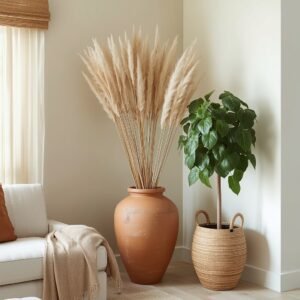
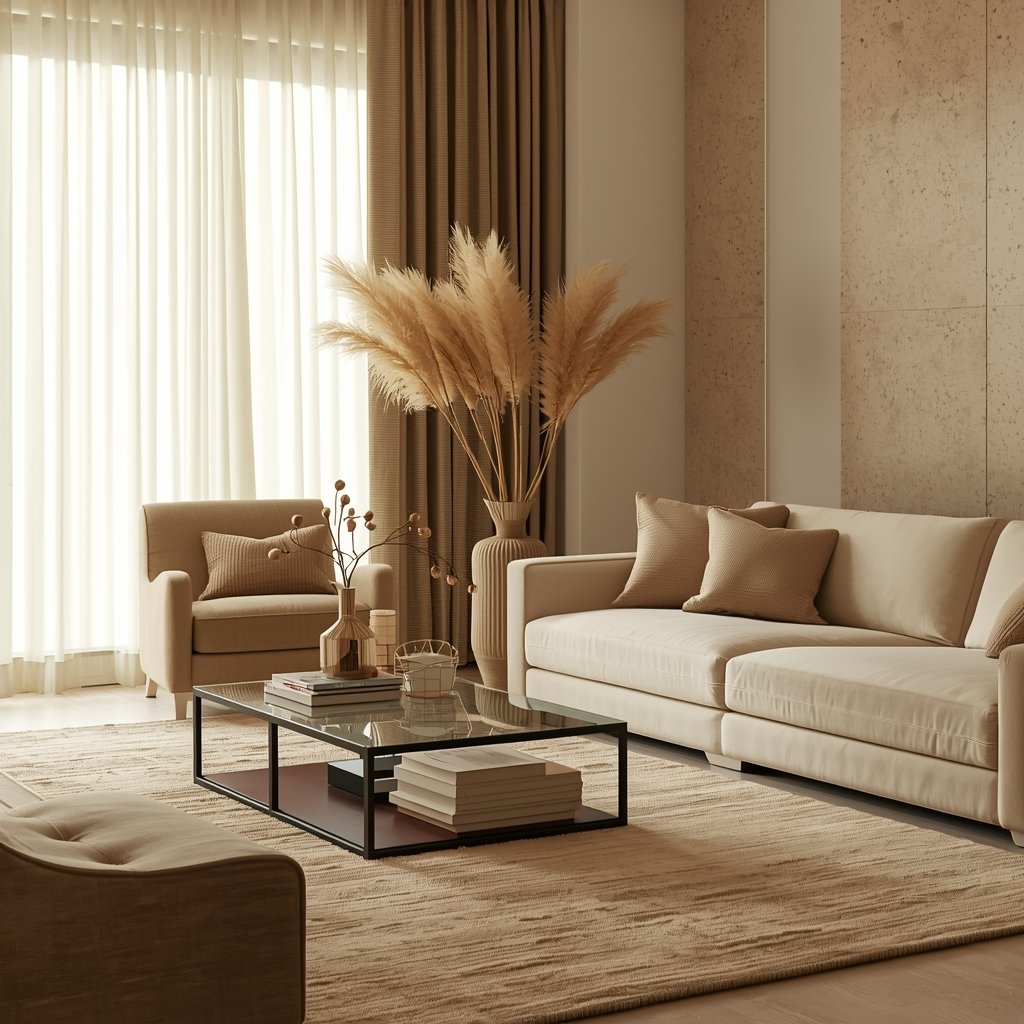
Dried botanical arrangements are having a particularly strong moment. Where fresh florals require constant maintenance, a beautifully arranged collection of dried pampas grass, cotton stems, bleached branches, and preserved eucalyptus can last for years and looks even more textured and dimensional over time. The trick to styling dried arrangements is scale — they need to be bolder than you might expect. A large ceramic amphora-style vase at floor height with an oversized dried grass arrangement becomes a room’s focal point. Smaller, more delicate dried bundles work best grouped in clusters of odd numbers on shelves or mantels, mixed with ceramics and small sculptures.
The containers you choose for botanicals matter as much as the plants themselves. In 2026, the most interesting vessels are handmade and imperfect — wabi-sabi inspired ceramics with thumb prints and uneven glazes, terracotta pots left unfinished or with crackled paint treatments, and woven basket planters in seagrass or banana leaf. These vessels reinforce the organic, handcrafted story of the whole space. Place botanicals near natural light sources where possible, not only for the plant’s health but because afternoon sunlight through leaves casts moving shadows on walls that no light fixture can imitate.
07. Bookshelves Styled as Art Installations
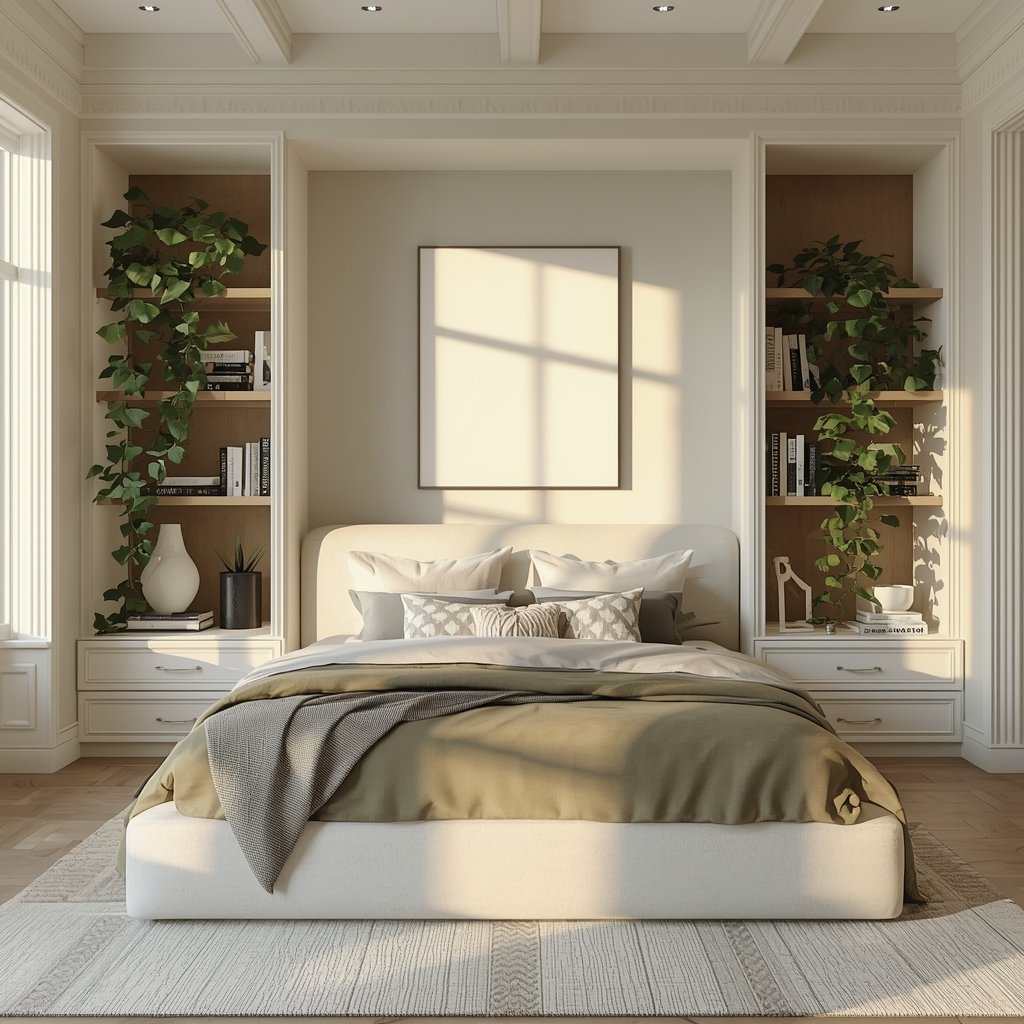
The bookshelf has quietly become one of the most expressive design elements in a home, and in 2026, people are finally treating it that way. A well-styled bookshelf is not just storage — it is a curated display of personality, taste, and visual intelligence. The key shift is moving away from purely book-focused shelves toward mixed arrangements where books share real estate with ceramics, small sculptures, trailing plants, framed photographs, and objects collected from travel. This mix of literary and decorative items creates visual variety and makes the shelf feel layered rather than flat.
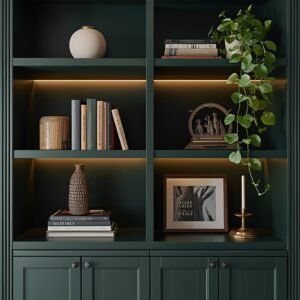
The styling principle that separates a beautiful shelf from a cluttered one is the rule of thirds and breathing room. Resist the urge to fill every inch. Instead, leave deliberate gaps between groupings. Stack some books horizontally and lean others vertically. Place a small ceramic object on top of a horizontal book stack. Tuck a trailing plant at the edge of a shelf so its leaves cascade naturally. Vary the heights — place a tall sculptural piece next to a low stack next to a single small vase. This rhythm creates visual movement that draws the eye across the entire shelf rather than getting stuck in one corner.
Color-coding books is a technique that never fully goes out of style, and in 2026 it is being done more subtly — grouping by warm tones on one shelf and cool tones on another, rather than organizing every individual book by hue. This creates color balance without the slightly clinical look that strict rainbow-coding can produce. For shelf color itself, dark-painted interiors (deep green, navy, or charcoal) inside built-in shelves create a moody, gallery-like backdrop that makes both books and decorative objects pop. Pair with warm-toned shelf lighting — small LED strip lights or individual battery-operated puck lights positioned at the back of each shelf level.
08. Layered Rugs That Create Zones and Warmth
A single rug on a hardwood floor does its job. Two rugs layered thoughtfully do something entirely different — they create warmth, dimension, and a sense of intentional design that makes a room feel professionally styled. The layered rug trend has been building momentum for a few years now, and in 2026 it has become one of the most accessible ways to dramatically elevate a living space without buying new furniture. The formula is simple: a larger, flat-woven or natural fiber rug as the base, and a smaller, more textured or patterned rug centered on top.
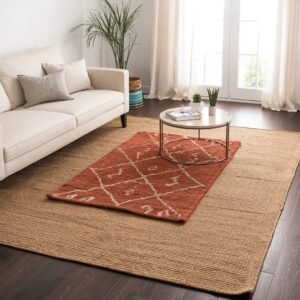
The base layer should be understated. A large jute, sisal, or flat-weave cotton rug in a neutral tone — ivory, warm sand, or natural undyed fiber — works as a foundation without competing visually. The top rug is where you introduce personality. A vintage-style Persian rug in faded reds and blues, a Moroccan Beni Ourain in black-and-white geometric pattern, or a hand-knotted wool rug in deep terracotta all make beautiful top layers. The contrast in texture between the smooth base and the pile of the top rug is as important as the color relationship — it is that contrast that makes layering feel rich rather than random.
Proportion and placement are critical. The top rug should be centered within the base rug with at least six to eight inches of the base rug visible on all sides — this framing effect is what makes layering look intentional rather than accidental. In living rooms, the front legs of the sofa and chairs should rest on the top rug. In dining rooms, both rugs should extend well beyond the chairs on all sides when they are pulled out. Layering also works brilliantly in bedrooms: a large jute rug extends under the bed, while a smaller sheepskin or wool rug sits on either side of the bed for a warm landing pad in the morning.
09. Earthy Ceramic and Stoneware Accents Throughout the Home
There is something deeply satisfying about the presence of ceramics in a home. Not the perfectly symmetrical, factory-fired kind — the handmade kind with slight wobbles, drip glazes that ran differently every time, and surfaces that catch light in a matte, chalky way. In 2026, handmade ceramic and stoneware accents are showing up not just on dining tables but throughout every room of the house. A single large stoneware vase on a console table. A cluster of small ceramic bud vases on a bathroom shelf. A hand-thrown bowl on a bedside table holding a candle and some smooth stones. Each placement is small, but collectively they give a home an unmistakable sense of warmth and authenticity.
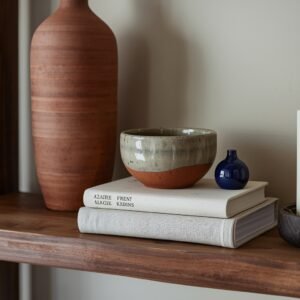
The glazes and finishes that are most relevant right now lean toward the natural and understated: reactive ash glazes in smoky gray and brown, matte terracotta with crackled finishes, deep cobalt with drip effects, and earthy celadon greens. These colors translate beautifully against the limewash walls, natural wood shelving, and linen upholstery that define the broader 2026 interior direction. When grouping ceramics, use the odd-number rule — three or five pieces together always look more naturally curated than two or four. Vary the heights and shapes dramatically: a tall cylindrical vase, a wide low bowl, and a small rounded bud vase create far more visual interest than three vases of similar proportion.
Ceramics also interact beautifully with other natural materials, which is part of their enduring appeal. A matte terracotta bowl sitting on a raw-edge walnut tray, next to a small stack of linen-covered books and a single unscented pillar candle, creates a vignette that feels both styled and completely natural. In the kitchen, stoneware canisters and open shelving with hand-thrown mugs and plates add a functional beauty that makes daily rituals — morning coffee, afternoon tea — feel genuinely pleasurable. Do not save beautiful ceramics for guests. Use them every day. They improve with handling.
10. Window Treatments That Frame Views Like Artwork
Windows are one of the most underutilized design opportunities in most homes. The instinct is often to cover them as minimally as possible — maybe a roller blind, maybe nothing at all — but the right window treatment can completely transform the atmosphere of a room. In 2026, the direction is firmly toward floor-length linen curtains in natural, undyed, or gently pigmented tones. When hung high and wide — close to the ceiling and well beyond the window frame on both sides — they make ceilings look taller, rooms look wider, and windows look grander than they actually are. This is one of the highest-impact, lowest-cost upgrades in home decor.
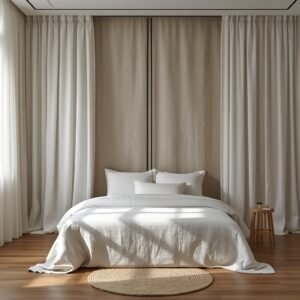
The fabric and weight of curtains matters more than most people realize. Sheer linen panels diffuse incoming light beautifully, casting the room in a warm, soft glow rather than direct sunlight. Layering a heavier linen or cotton panel behind the sheer — on the same rod or a separate blackout track — gives you flexibility: filtered light during the day, privacy and warmth at night. Hardware is increasingly minimalist in 2026: thin matte black or aged brass rods with simple ring clips, minimal finials, and clean lines that let the fabric be the focus. Avoid ornate curtain hardware that competes with the softness of natural linen.
For color, the most enduring choices remain rooted in natural dye palettes — undyed ivory, warm oat, soft sage, dusty clay, and charcoal linen. These tones work in almost any interior because they draw from the same natural color story as the other elements in the room. If you want to add personality through window treatments, consider subtle woven stripes, a textured dobby weave, or a raw hemmed edge at the bottom rather than a clean machine finish. These small details tell the story of craft and intentionality that defines the most beautiful interiors of 2026 — rooms that feel complete not because they are perfect, but because every element was chosen with care.
The most beautiful homes in 2026 are not the most expensive ones. They are the ones that feel genuinely inhabited — layered with texture, filled with natural materials, and lit with warmth rather than glare. Start with one idea from this list. Change one corner of one room. You might be surprised how quickly the rest of the space responds.