A friend redid her bathroom down to almost nothing — one tray, one plant, one towel color — and somehow it feels calmer than any bathroom I’ve been in with more “stuff.” I’ve been slowly stripping ours back ever since. Here are 10 ways to do the same.
1. Minimalist Bathroom With a Neutral Color Palette That Feels Effortlessly Calm
This is where she started too — a few close shades of warm white and taupe instead of one flat color everywhere. Neutral tones like warm white, soft beige, light greige, and pale taupe work beautifully together because they reflect light and create a sense of openness. You do not need to pick just one color. Layering two or three close neutral shades adds visual depth without making the space feel busy. Think warm white walls paired with a slightly darker taupe floor tile and a soft cream vanity. This kind of tonal layering is subtle but makes the whole bathroom feel cohesive and intentional. Add a matte finish to your walls and tiles to keep things grounded rather than shiny and clinical.
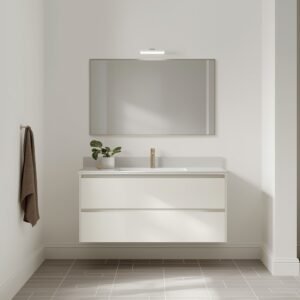
Textures are your best friend in a neutral minimalist bathroom. Because the colors are quiet, the textures do all the talking. A rough linen hand towel draped over a slim brass rail, a slightly bumpy concrete-effect floor tile, a smooth ceramic basin — these small contrasts create a richness that feels luxurious without any clutter. For lighting, go soft and warm. A simple wall-mounted light on either side of the mirror gives flattering, even light and keeps the design clean. Avoid anything too ornate. A simple round or rectangular mirror with no frame, or one with a thin matte black frame, keeps the look polished and beautifully understated.
2. A Minimalist Bathroom Built Around Natural Stone Textures
A small travertine accent wall in her bathroom looks like it belongs in a much bigger renovation than it actually was. It has personality, warmth, and a quiet beauty that fits perfectly in a minimalist bathroom. Marble, travertine, and limestone are the top choices here. Light travertine with its soft cream and warm beige tones is especially gorgeous in a bathroom because it feels grounded and earthy without being heavy. You can use it on the floor, on one accent wall, or even on the vanity surface. Keep everything else very simple when you go with stone. The material is the star, so let it breathe. A white or off-white plaster wall beside a travertine feature wall looks stunning and very Pinterest-worthy.
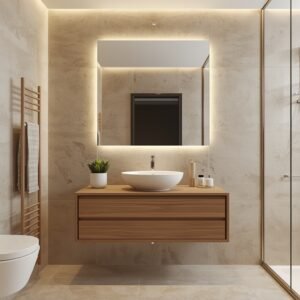
Pairing natural stone with raw wood elements takes the look even further. A floating vanity in light oak or walnut gives warmth against the cool stone and creates a beautiful contrast of organic textures. Keep the hardware minimal, maybe a single brushed nickel or matte brass pull, and keep the sink basin simple. An oval or round undermount sink in matte white or raw concrete keeps the lines clean. For lighting, consider a backlit mirror for a soft, glowing effect that highlights the texture of the stone wall beautifully. Add a small natural loofah, a wooden soap dish, or a single succulent in a ceramic pot to complete the look. These tiny details make the space feel lived-in and real.
3. Minimalist Bathroom Design With a Black and White Contrast Theme
We almost went fifty-fifty black and white and I’m glad we didn’t — keeping it mostly white with black just as accents looks much sharper. The key is balance. Too much black and the space feels dark and heavy. Too much white and it can feel cold and sterile. The sweet spot is roughly eighty percent white with black used as a crisp accent. White walls, white large-format floor tiles, white vanity, and then black used in the tap, mirror frame, towel rail, and light fixtures. This approach ties the whole space together through hardware and accessories rather than overwhelming the eye with bold walls. It feels modern, clean, and very well-considered.
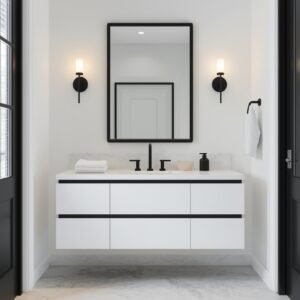
Texture is important in a black and white minimalist bathroom to keep it from feeling flat. A white ribbed ceramic vase on the vanity, a textured white bath mat, a matte black tap with an interesting silhouette — these small details create visual interest without adding color. A large matte black framed mirror makes a strong statement above the vanity and works as the visual anchor of the whole design. For lighting, go with warm white bulbs rather than cool ones. Cool light in an all-white bathroom can feel harsh, while warm light softens everything and makes the space feel more inviting. A simple black wall sconce on either side of the mirror is all you need.
4. Warm Minimalist Bathroom Ideas With Wood Accents and Soft Lighting
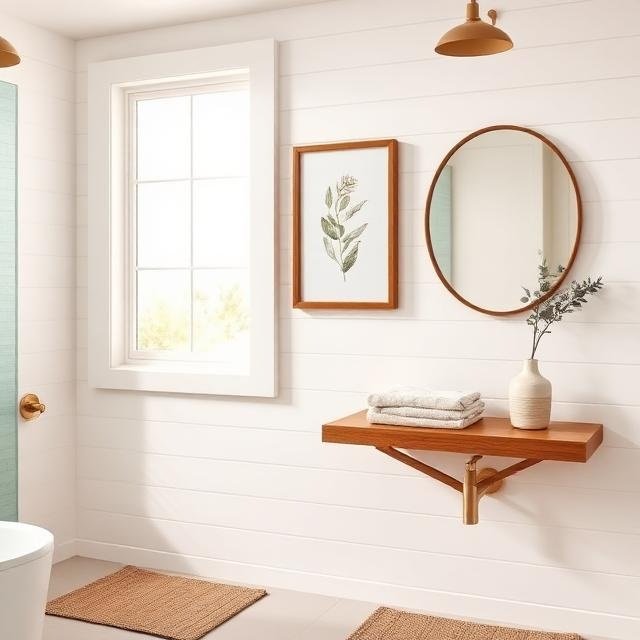
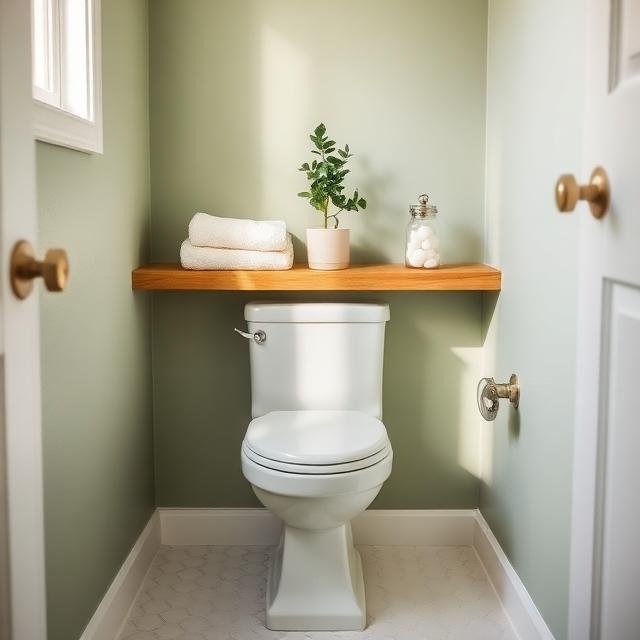
This is basically us — we like things simple, but all-white felt too cold, so a floating oak vanity warmed it right up. It is all about balancing the simplicity of minimalism with materials that feel genuinely warm and human. Light wood is the hero here. A floating vanity in natural oak, a teak wood bath mat, a small wooden shelf above the toilet — these details shift the energy from cold and clinical to calm and welcoming. Pair wood tones with soft plaster-effect walls in warm sand or greige, and you instantly have a bathroom that feels like a boutique hotel in the best possible way. Stick to a very light wood tone rather than dark walnut to keep the space feeling airy.
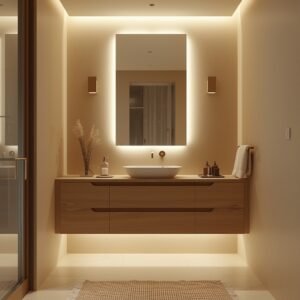
Soft, layered lighting is what makes a warm minimalist bathroom truly magical. Avoid a single overhead light if you can. Instead, use a backlit mirror combined with a small bedside-style table lamp on the vanity or a wall sconce at a lower height. This multi-source lighting approach creates a warm, golden glow that feels much more inviting than flat overhead lighting. Layer textures with a chunky linen towel, a round woven basket for storage, and a small ceramic tray holding a candle and a bar of soap. These are the details that feel curated and intentional without looking overdone. The mood you are going for is serene, warm, and simple — like a slow Sunday morning.
5. Minimalist Bathroom With a Spa-Like Wet Room Layout
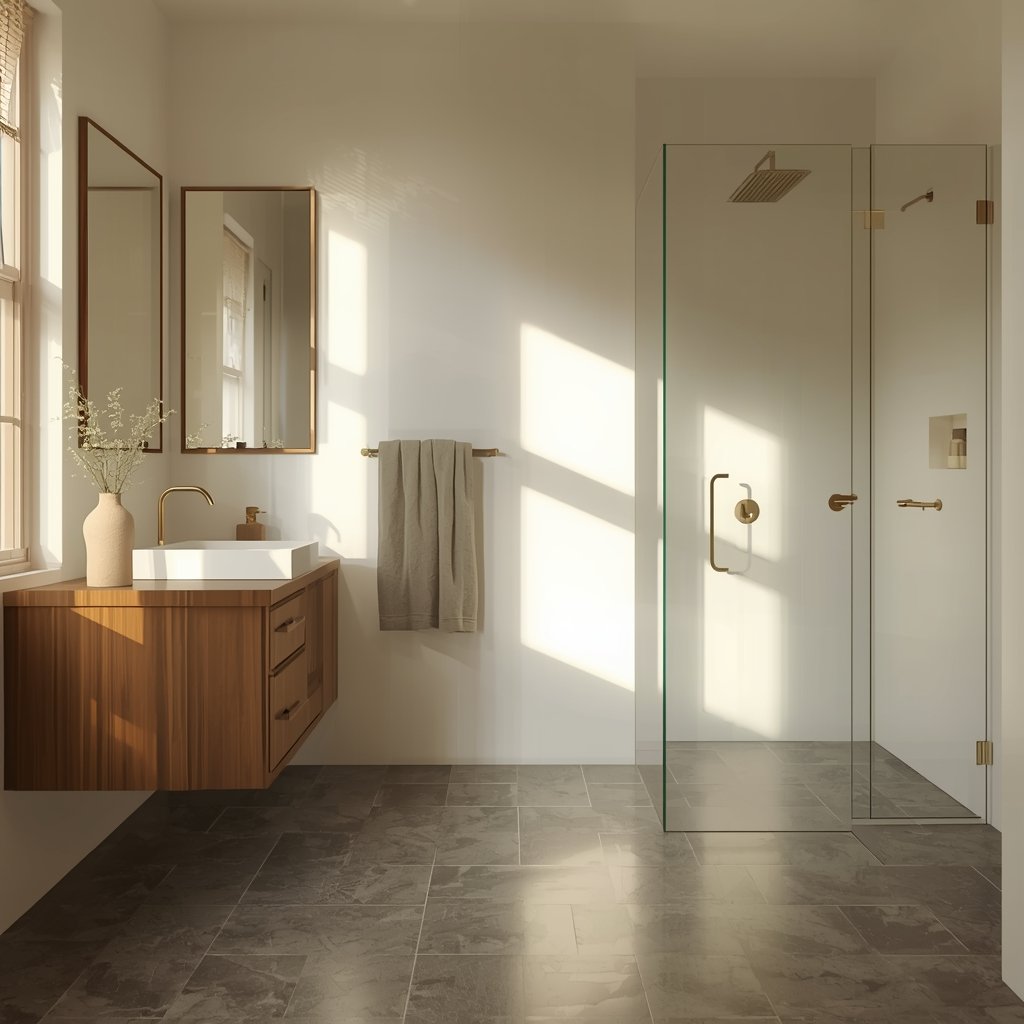
My friend’s sister did a full wet room in her small bathroom, and honestly it makes the whole space feel bigger than it is. When you remove the shower enclosure and let the whole bathroom become the shower zone, something shifts. The space opens up, the lines become cleaner, and everything feels intentional and calm. For a minimalist bathroom with a wet room feel, the key is continuity. Use the same large-format tile on both the floor and the walls. Pale grey, warm white, or soft sand tones work especially well. Keep the grout lines thin and close to the tile color so the surface reads as one smooth, uninterrupted plane. A linear drain running along one wall keeps the floor looking sleek and uncluttered.
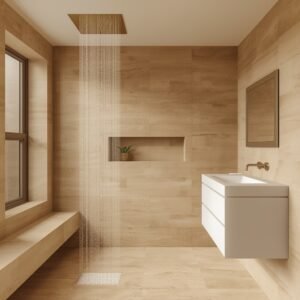
A rain shower head mounted flush to the ceiling is the ultimate minimalist detail in a wet room. It looks incredibly clean, functions beautifully, and turns every shower into a calming ritual. Keep the rest of the fixtures very simple. A wall-mounted mixer tap in matte black or brushed brass, a single recessed shelf carved into the wall for your soap and shampoo, and nothing more. For the vanity area, float it above the floor on simple metal brackets or a wall-mounted frame. This keeps the floor visible and makes the whole room feel larger. A single stem in a tall slim vase and a folded waffle-weave towel on a minimalist rail complete the look with effortless grace.
6. Japandi Minimalist Bathroom With Wabi-Sabi Inspired Details
A hand-thrown, slightly uneven basin in her bathroom was the one splurge that made the whole Japandi look feel real instead of showroom-perfect. The philosophy is simple: only keep what serves a purpose, and find beauty in natural imperfection. In a Japandi minimalist bathroom, you will see a lot of raw textures, earthy tones, and organic shapes. Think a hand-thrown ceramic basin in an uneven, artisan shape. Think rough plaster walls in a warm clay or putty tone. Think floor tiles that mimic the texture of natural stone but with a slightly imperfect, handmade feel. These are the details that give a Japandi bathroom its soul.
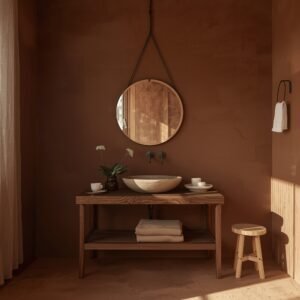
Furniture in a Japandi bathroom is low-profile, functional, and made from natural materials. A low floating vanity in dark walnut with simple push-to-open drawers keeps the look clean while providing practical storage. A round, frameless mirror or a simple wooden-framed circle mirror above the vanity feels true to the aesthetic. Layer in a bamboo stool for towels or a small plant, a ceramic cup for toothbrushes, and a smooth river stone as a soap rest. For lighting, nothing beats a warm Edison-style bulb in a simple matte black fitting. It gives just enough warmth to make the space feel deeply calm and grounded. The goal is a bathroom that feels quiet, purposeful, and deeply peaceful.
7. Small Minimalist Bathroom Ideas That Make Every Inch Count
Our first apartment bathroom was tiny, and a wall-hung toilet plus a floating vanity made more difference to the floor space than I expected. When you have less space, every choice matters more, and that forced intentionality often produces the most beautiful results. The number one rule in a small minimalist bathroom is to keep the floor as visible as possible. Wall-hung toilets, floating vanities, and open shelving all help lift visual weight off the floor and make the room feel larger. Use the same tile on the floor and partway up the wall to create a seamless, uninterrupted surface that tricks the eye into seeing more depth than is actually there.
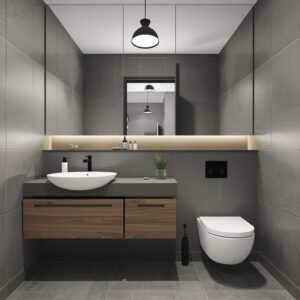
Mirrors are your most powerful design tool in a small minimalist bathroom. A large mirror, or even a full mirror wall above the vanity, doubles the perceived size of the room instantly. Keep your palette very tight — one or two tones maximum — and keep accessories extremely edited. One soap dispenser, one small plant, one towel rail. That is it. Built-in wall niches replace bulky shelving and keep everything flush and streamlined. A single pendant light hung low above the vanity adds warmth and height without taking up floor or wall space. Choose fixtures in a single metal finish throughout, whether brushed brass or matte black, to give the small space a collected, curated feel.
8. Minimalist Bathroom Ideas Using Concrete and Industrial Textures
Microcement sounded too industrial for us at first, but paired with warm wood shelving, it doesn’t feel cold at all in person. The secret is pairing concrete surfaces with warm, natural materials so the space never tips into feeling industrial or uncomfortable. Microcement is the most popular choice for minimalist bathrooms because it can be applied seamlessly over walls, floors, and even the vanity surface, creating a completely unified, uninterrupted texture from floor to ceiling. Choose a warm grey, putty, or sandy microcement tone rather than a cold blue-grey, and the whole space will feel grounded and calm rather than austere.
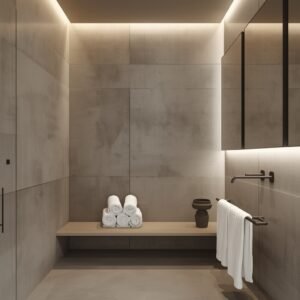
Balance the concrete with warm wood and soft white linens. A light timber floating shelf above the vanity, a wooden bath tray across a freestanding tub, and thick white cotton towels folded neatly on a wall rail all soften the industrial edge of concrete beautifully. A matte brass tap and matching towel rail add a luxurious warmth that complements the raw texture of microcement perfectly. Keep decor extremely minimal: a single ceramic vase, a dark green plant like a snake plant or fern, and nothing else. The concrete surface is so visually interesting that it truly does not need much decoration. For lighting, long horizontal warm white LED strips recessed into the ceiling or around the mirror give the space a very modern and clean finish.
9. Minimalist Bathroom With Freestanding Bathtub as the Focal Point
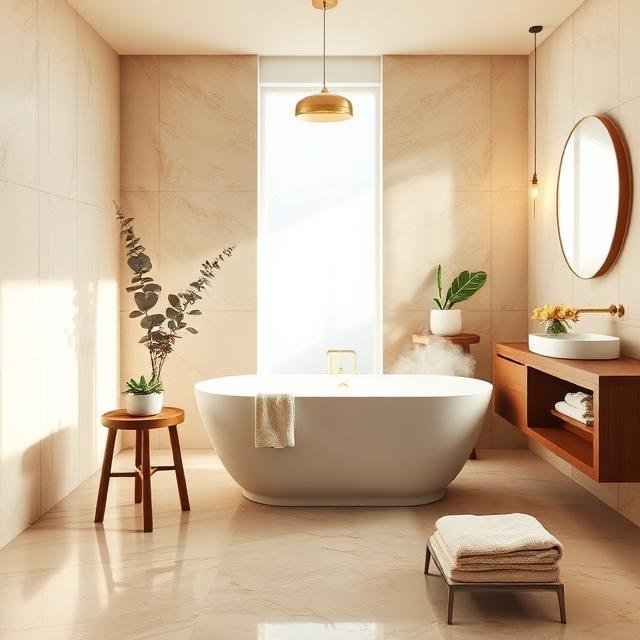
A simple white oval tub near the window is basically the only “decor” my friend’s sister needed once she stripped everything else back. When you strip a bathroom back to its essentials and then place one beautiful bathtub in the space, it becomes a piece of sculpture. The room is designed around it, and every other choice supports it. The most popular freestanding tub for a minimalist bathroom is a simple oval or slipper shape in matte white or warm white. These clean curves are timeless and work with almost any style, from modern Scandinavian to warm Mediterranean. Position the tub near a window if possible so natural light washes over it and creates that dreamy, glowing effect you see on Pinterest constantly.
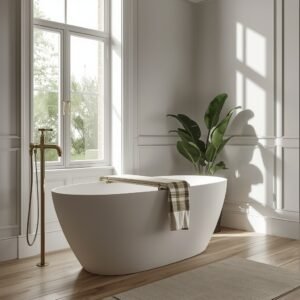
Keep the rest of the bathroom very intentionally simple when you have a freestanding tub as the hero. A pared-back vanity, a simple frameless mirror, a floor-mounted freestanding tap in brushed brass or polished chrome — these are all the supporting characters need. Do not over-decorate around the tub. A simple wooden bath tray with a candle, a book, and a small glass of water is enough. A fluffy bath mat in natural cotton placed in front of the tub and a single large plant like a fiddle leaf fig or monstera in the corner add life and softness. The whole effect should feel like a personal spa that is quietly beautiful and completely calming.
10. Minimalist Bathroom Refresh Ideas on a Budget That Still Look Stunning
None of what we did cost much — decluttering the counter was free, and it made the biggest difference of everything on this list. Some of the most dramatic transformations happen through simple, affordable changes that shift the feeling of a space completely. Start with decluttering. Remove everything from your countertops, shelves, and ledges, and only put back what you use every single day. This one step alone can transform a chaotic bathroom into something that feels clean and considered. Then look at your hardware. Swapping out old brass or chrome taps, towel rails, and toilet roll holders for a matching set in matte black or brushed brass makes an enormous difference and ties the whole space together.
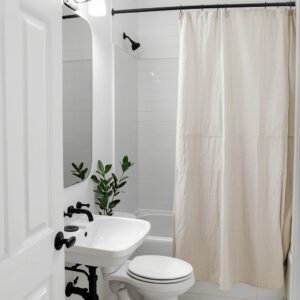
Paint is the most budget-friendly tool you have. A fresh coat of warm white or soft sage on the walls immediately lifts the whole bathroom. If you cannot retile, consider a large shower curtain in linen or waffle cotton — it draws the eye and adds instant texture and style. Replace your old bath mat with a natural cotton or stone-grey woven one. Get a matching set of ceramic accessories: a soap dispenser, a small dish, a cup for toothbrushes. Add one small plant, a trailing pothos or a small succulent, and suddenly your bathroom tells a very different story. These small, thoughtful changes build on each other and create a cohesive, calm minimalist bathroom without a full renovation or a large budget.
Clearing the counter was the first thing we did, and it’s still the change I’d tell anyone to start with. Everything else followed slowly after that.