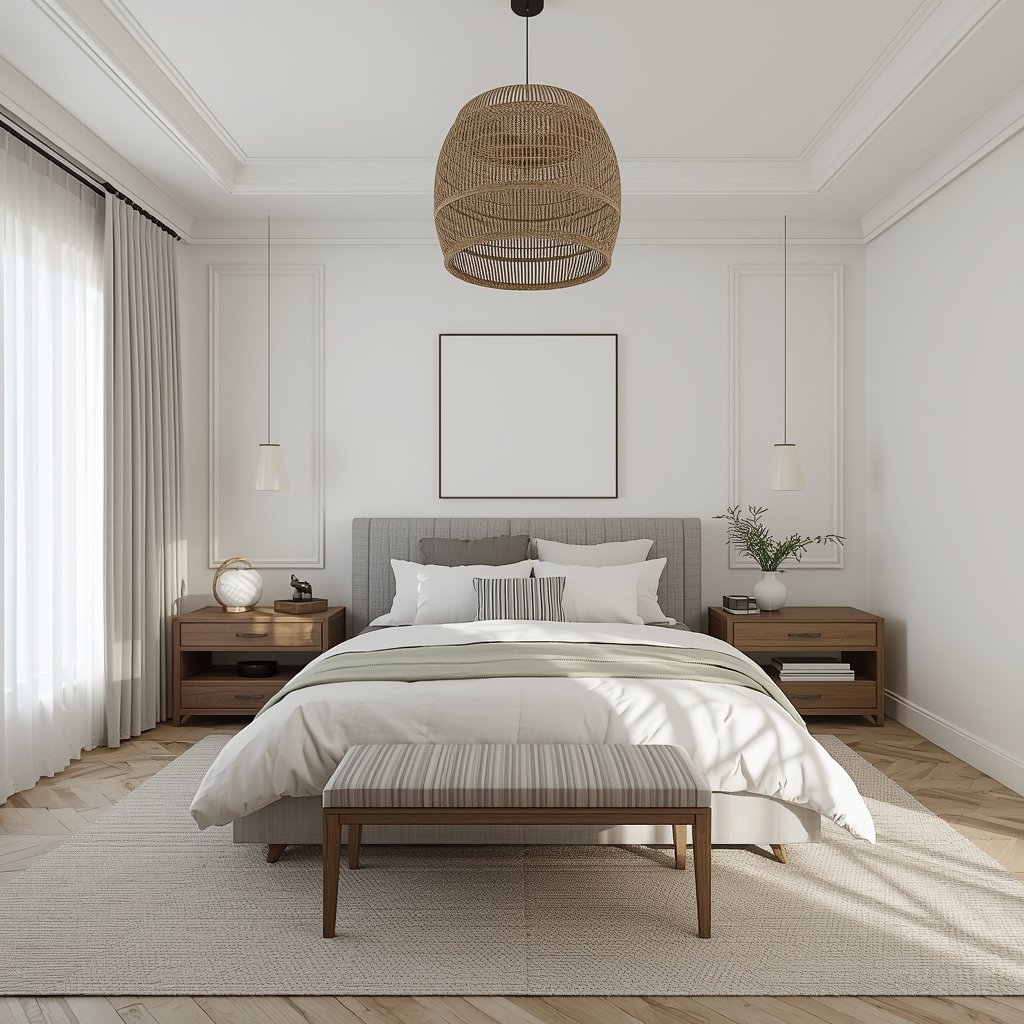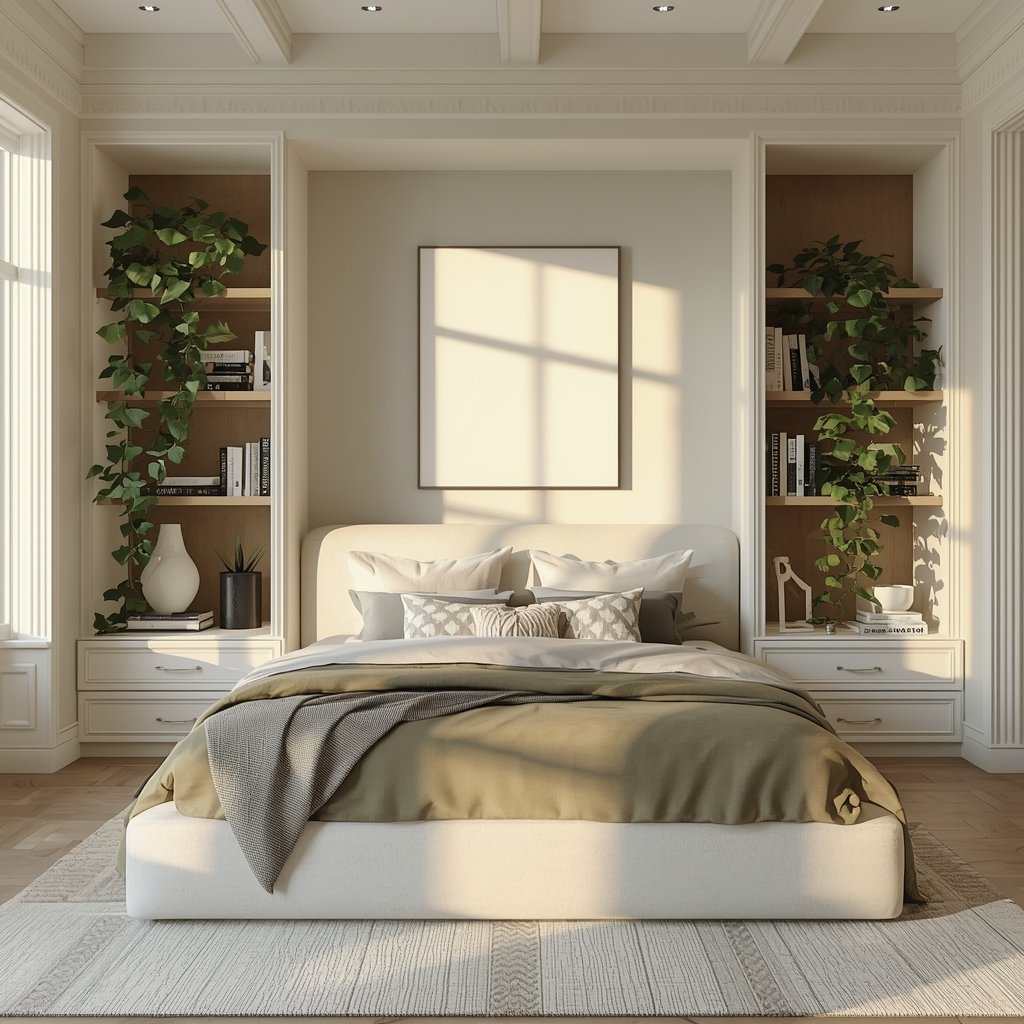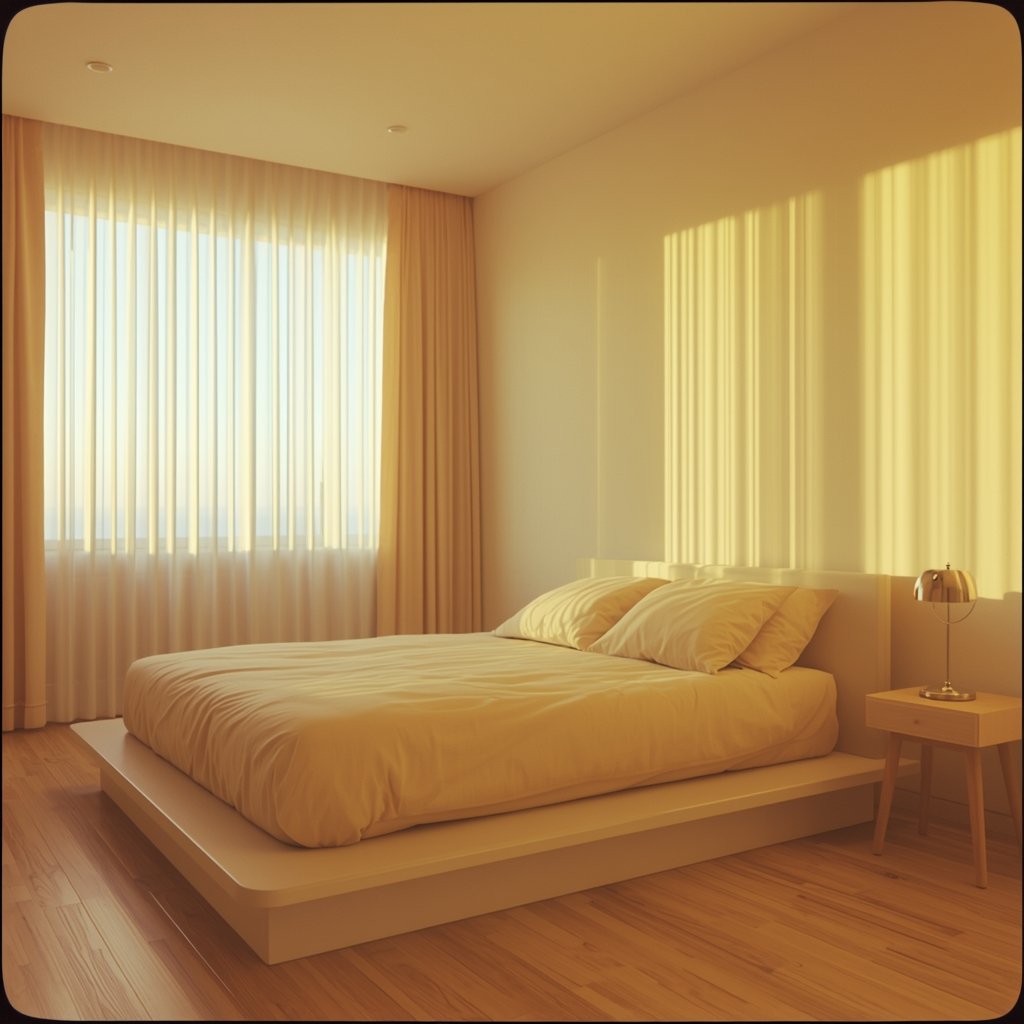
Minimalist bedroom design is not just a trend — it is a way of living. When your bedroom feels calm and clutter-free, your whole mind feels lighter. If you have been dreaming of a peaceful sleep space that looks straight out of Pinterest, you are in the right place.
1. Minimalist Bedroom with a Neutral Color Palette That Feels Like a Hug
Color is the first thing you feel when you walk into a room, even before you notice the furniture. A minimalist bedroom built around soft neutrals — think warm white, creamy beige, and gentle greige — instantly lowers your energy and tells your brain it is time to relax. These tones work because they reflect light beautifully without demanding attention. Pair warm white walls with a linen duvet in a slightly deeper sand tone to create that effortless layered look. Add a chunky knit throw at the foot of the bed for texture. The goal is not to make it look bare — it is to make it feel intentionally calm. Keep your furniture low and simple, like a platform bed in natural wood or matte white. Nothing should compete for your eye.
When you are working with a neutral palette, the magic is in the texture play. Smooth cotton pillowcases next to a rough linen throw, a silky duvet cover paired with a wooden bed frame — these small contrasts make the room feel rich without being busy. For lighting, go warm. A soft bulb in a ceramic or rattan lamp on the nightstand creates the coziest glow in the evenings. During the day, let sheer curtains filter natural light so the room stays bright but never harsh. Keep the floor mostly clear. A small jute or wool rug under the bed anchors the space without adding noise. When every element is calm and considered, the room starts to breathe.
2. Minimalist Bedroom Design Using a Japandi-Inspired Aesthetic
Japandi is the design world’s favorite love child — a blend of Japanese minimalism and Scandinavian warmth. A minimalist bedroom built on Japandi principles feels grounded, serene, and quietly beautiful. Think low furniture close to the floor, clean horizontal lines, and a palette of warm charcoal, soft taupe, and muted sage. Start with a bed frame in dark walnut or blackened oak — something with visible wood grain and zero ornamentation. Layer the bed with a simple white or oatmeal linen set, then add one dark throw folded neatly across the corner. The fewer decorative objects, the better. One ceramic vase, one small plant, one simple lamp. Every object should feel chosen, not collected.
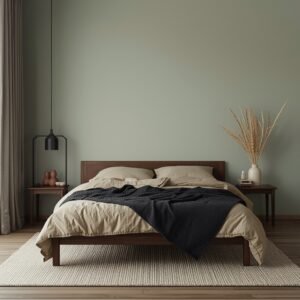
The flooring in a Japandi-inspired minimalist bedroom does a lot of the heavy lifting. Wide-plank light wood floors with a thin low-pile rug in charcoal or warm grey keep the floor interesting without adding chaos. Wall texture can come from a subtle limewash paint or a plaster finish — something that has depth but no pattern. For lighting, paper pendant lamps or thin rattan shades keep the aesthetic soft and natural. Avoid metallic finishes unless they are brushed brass in small doses. The beauty of Japandi is its honesty — natural materials, natural colors, nothing pretending to be something it is not. Your bedroom should feel like a place of deep rest, and this aesthetic delivers that with quiet confidence.
3. Minimalist Bedroom with a Soft Sage Green Accent Wall
Not every minimalist bedroom has to be white. A dusty sage green accent wall is one of the most beautiful things you can do for a sleep space — it brings nature inside without disrupting the calm. Sage works because it is a muted, low-saturation color that reads as almost neutral in certain light. Pair it with white trim, natural wood tones, and cream or warm white bedding for a combination that feels fresh and earthy at the same time. The accent wall should sit behind the bed to frame it like a piece of art. Keep the remaining three walls white or very light warm grey so the sage feels like a soft focal point rather than an overwhelming choice.
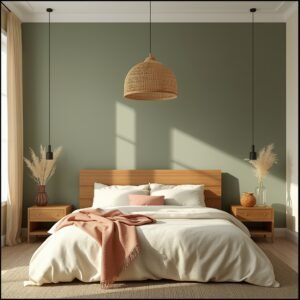
Layering textures against a sage wall makes everything feel more intentional. Rough linen pillow covers, a woven rattan pendant light, and a simple wooden bed frame all play beautifully against that muted green. You can bring in small doses of terracotta — a small pot, a warm-toned throw pillow — to add warmth without noise. For floor covering, a natural jute rug or a simple off-white wool rug grounds the space. Do not add too many green accents elsewhere in the room — let the wall do the work. At night, the sage wall absorbs warm light in the most beautiful way, making the whole room feel like a quiet forest clearing. It is one of those colors that genuinely changes how you feel when you walk through the door.
4. Minimalist Bedroom Ideas for Small Spaces That Feel Bigger
A small bedroom does not have to feel cramped. With the right minimalist approach, it can actually feel more peaceful than a large, cluttered room. The key is to choose furniture that fits the scale of the space — a low-profile bed without a tall headboard, a floating nightstand instead of a bulky bedside table, and a slim wardrobe or open clothes rail instead of a massive closet. Keep the color palette very light — soft white, pale blush, or warm cream — to reflect as much light as possible. Use a single large mirror on one wall to visually double the space. Mirrors in a minimalist bedroom should be simple, frameless, or in a very thin matte frame.

Vertical space is your friend in a small minimalist bedroom. A single floating shelf above the nightstand or a slim wall-mounted lamp keeps the floor clear and the room feeling open. Avoid rugs that are too small — a larger rug that almost reaches the walls gives the illusion of more floor space and makes the room feel cohesive. Under-bed storage done discreetly keeps clutter hidden without adding visual bulk. Keep window treatments light and sheer so natural light can flood in all day. The rule in a small minimalist bedroom is simple: if it does not need to be there, it should not be there. Every object must earn its place. That discipline is exactly what creates that airy, breathable feeling.
5. Minimalist Bedroom with Warm Wood Tones for a Cozy Nordic Feel
There is something deeply comforting about natural wood in a bedroom. A minimalist bedroom built around warm wood tones — honey oak, warm walnut, or light pine — has a cozy, lived-in quality that pure white rooms sometimes lack. Start with a solid wood bed frame in a simple, clean-lined design. Add matching or complementary wood tones in the nightstand, a small low dresser, and even the lamp base. The repetition of wood tones throughout the room creates visual harmony without needing many decorative objects. Keep bedding simple — white, cream, or warm oatmeal linen against the wood feels effortlessly beautiful and very Pinterest-worthy.

The walls in a wood-toned minimalist bedroom should stay light to let the wood breathe. Warm white or pale cream is ideal. A soft wool rug in camel, oat, or warm grey keeps the floor cozy, especially in colder months. Layer the bed with different textures — a smooth duvet, a textured linen sham, and a loosely woven throw create that effortless, cozy layering that photographs so well. For lighting, warm-toned bulbs in simple ceramic or wood-based lamps add to the golden, Nordic hygge feeling. Keep the room free of harsh, cold-toned elements. No chrome, no stark white plastic, nothing that disrupts the warm, natural story you are telling with every material in the space.
6. Minimalist Bedroom Using Dark, Moody Tones for a Dramatic Retreat
Minimalism does not have to mean light and airy. A dark, moody minimalist bedroom can feel incredibly luxurious and cocooning — think deep charcoal walls, dark linen bedding, and low warm lighting. This approach works best when you commit to the palette fully. Paint the walls, ceiling, and even the trim in the same deep tone for that enveloping, hotel-suite feeling. A dark upholstered bed frame in deep grey or forest green velvet anchors the room beautifully. Keep furniture to a minimum and choose pieces with clean, simple lines so the darkness reads as intentional rather than heavy.
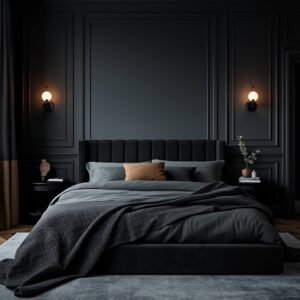
The secret to making a dark minimalist bedroom feel warm rather than oppressive is layered lighting. Wall sconces on either side of the bed instead of table lamps keep the nightstands clear and create a soft, even glow. A single candle or a small dim light in the corner adds depth and atmosphere. Layer the bed with varied textures — a velvet duvet, cotton sheets, a matte linen throw — so it does not look flat in the low light. Bring in one or two natural elements: a small plant, a rough ceramic vase, a wooden object. These organic touches stop the room from feeling too slick or cold. When done right, a dark minimalist bedroom is one of the most restful spaces imaginable.
7. Minimalist Bedroom Design with an Organic, Earth-Toned Palette
Earth tones are having a serious moment in minimalist bedroom design — and for good reason. Colors pulled straight from nature, like warm clay, dusty terracotta, soft mushroom, and muted olive, create spaces that feel both grounded and deeply restful. Build the palette by starting with a terracotta or warm clay accent wall behind the bed. Balance it with natural linen bedding in cream or warm white. The pairing is rich without being loud. Add a woven rattan pendant light or a curved terracotta-based lamp to reinforce the organic theme. Choose a bed frame in light natural wood or a simple metal frame in matte black — something that supports without competing.

Textures in an earth-toned minimalist bedroom are everything. Rough clay pots, smooth linen, soft wool, raw wood grain — these layers create that sensory richness that makes a room feel complete. A handwoven wall hanging in neutral tones above the bed adds art without overwhelming the space. Keep it small and simple. For the floor, a flatweave rug in warm terracotta or burnt sienna ties the whole palette together without being too bold. Plants are a natural fit in this kind of room — a trailing pothos, a sculptural snake plant, or a small fig tree in a textured pot brings life and a touch of green that complements the earthy tones beautifully. Every corner of this room should feel like the earth breathed it into existence.
8. Minimalist Bedroom with Soft Blush and White for a Feminine Touch
A soft blush and white minimalist bedroom feels romantic without trying too hard. This palette is incredibly versatile — it reads as modern and restrained when paired with the right furniture, and it photographs beautifully in natural light. Start with white walls and let blush come in through textiles: a blush linen duvet, dusty rose throw pillows, a soft pink knit throw. Choose a bed frame in white-painted wood or pale natural oak to keep the mood light and fresh. The key to avoiding the overly sweet look is keeping the blush very muted — dusty, almost nude, rather than bright pink. Think sunset, not bubblegum.
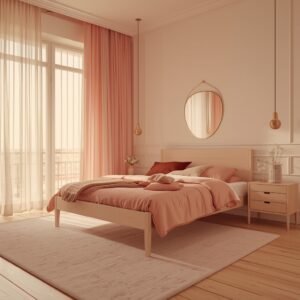
Balance is what makes this palette work in a minimalist bedroom. Add grounding elements to prevent the room from feeling too delicate — a small piece of aged brass hardware, a white ceramic lamp base, a slim oval mirror in a thin warm metal frame. For the floor, a plush ivory or light stone-colored rug adds softness underfoot and completes the dreamy quality of the space. Layer the bed with different pillow textures — velvet, linen, and cotton together in the same blush and white family look effortlessly curated. Keep art minimal: one small framed botanical print or a single abstract piece in warm whites and blush. In morning light, this room will look absolutely stunning.
9. Minimalist Bedroom Idea with a Statement Arch or Curved Headboard
Architectural detail can be the single most impactful element in a minimalist bedroom — and right now, arched and curved headboards are the design feature everyone on Pinterest is saving. An arched headboard in soft white, warm plaster, or natural wood instantly makes a bed feel like the centerpiece of the room without requiring any other decoration. The curve softens the space and adds a quiet elegance that straight-lined furniture cannot. Keep everything else around it very simple — plain white bedding, minimal nightstands, clean walls — so the headboard remains the star. This is the best example of the minimalist principle: one bold thing, done beautifully.

You can also create an arched effect on the wall behind the bed by painting an arch shape in a slightly deeper tone than the wall color. This painted arch trick is budget-friendly and incredibly effective — it frames the bed in the most architectural, deliberate way. Pair a plaster-toned arch with warm cream bedding and a single hanging rattan lamp above for a look that is both editorial and livable. Add one or two simple objects on each nightstand — a small stack of books, a ceramic dish, a thin candle — to fill the space without cluttering it. The curve of the arch makes the whole room feel softer and more intentional. It is the kind of design choice that makes people stop scrolling.
10. Minimalist Bedroom Inspired by a Luxury Hotel for Everyday Escape
The best luxury hotel rooms are actually deeply minimalist. They are calm, uncluttered, beautifully lit, and every element is chosen with intention. You can bring that same feeling into your own minimalist bedroom without spending a fortune. Start with the bed — this is where the investment matters most. High-quality white or warm white bedding in crisp cotton or smooth linen, layered simply with clean folds, makes any room feel instantly elevated. A solid, simple bed frame in dark wood or upholstered linen keeps it grounded and refined. Keep the nightstands clear except for a lamp and one small object. Cleanliness and restraint are the whole point.

Hotel-inspired minimalist bedrooms often use scent, texture, and lighting together to create a full sensory experience. A simple reed diffuser or a clean-scented candle on the dresser adds to the feeling without adding visual clutter. Blackout curtains in a linen or soft cotton texture in white or warm grey give the room that deep, private quiet that makes hotel sleep so good. Layer the bed with a waffle-weave blanket or a smooth coverlet folded at the foot. Opt for bedside sconces instead of table lamps to keep the surfaces clear. Add a tray to the dresser or bench at the foot of the bed to organize small items neatly — it is the oldest hotel trick in the book, and it works beautifully every single time.
A minimalist bedroom is not about having less — it is about making room for what actually matters. When you clear the noise from your sleep space, something remarkable happens: you sleep better, you feel calmer, and you actually enjoy being in your room. Start with one change. Pick one idea from this list that resonates with you and build from there. The most beautiful spaces are not designed overnight — they evolve, piece by piece, with intention.