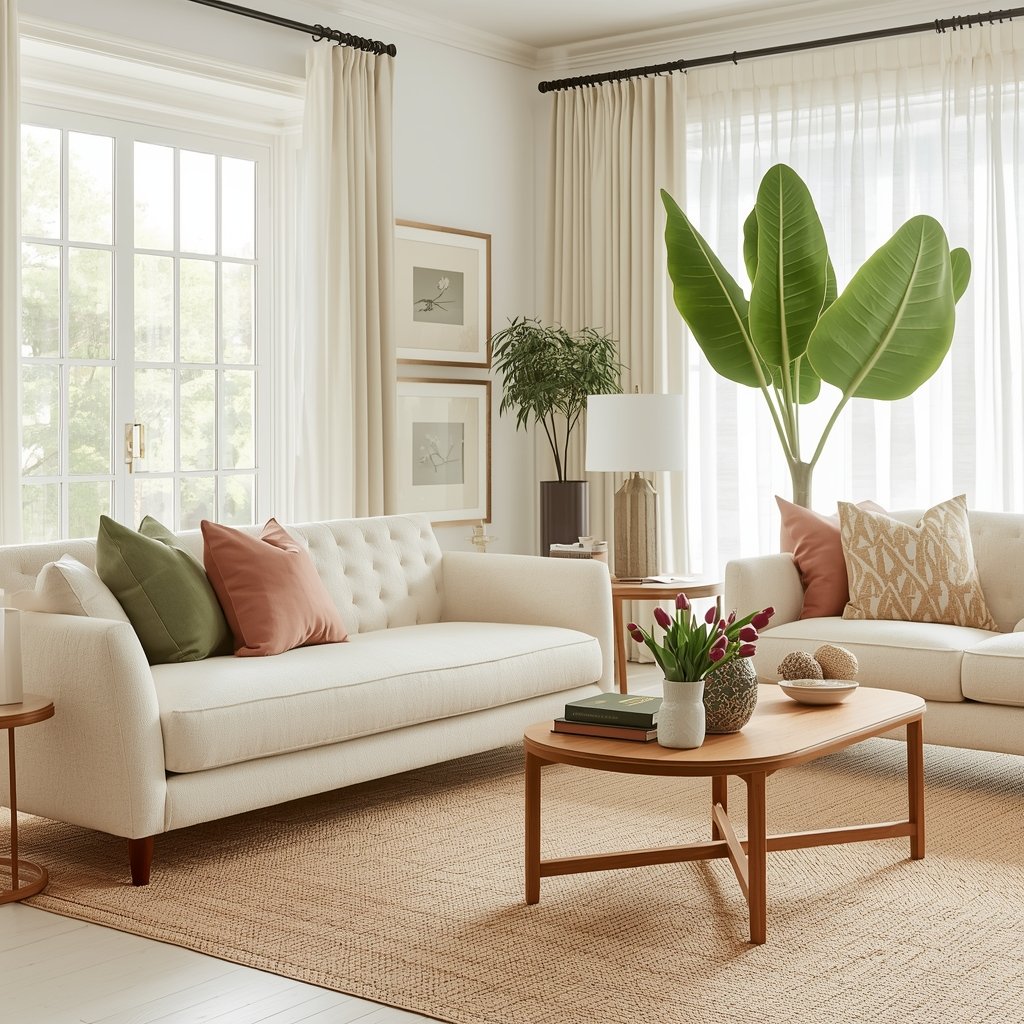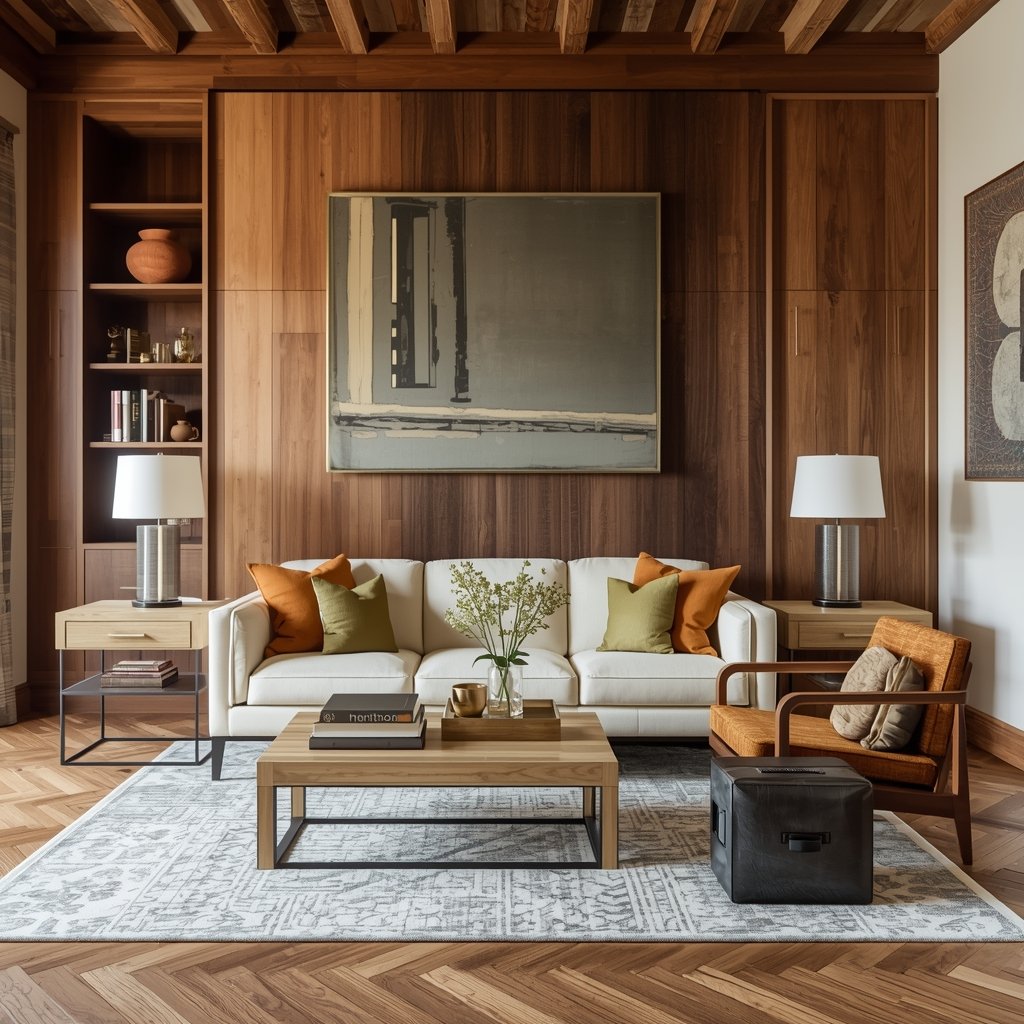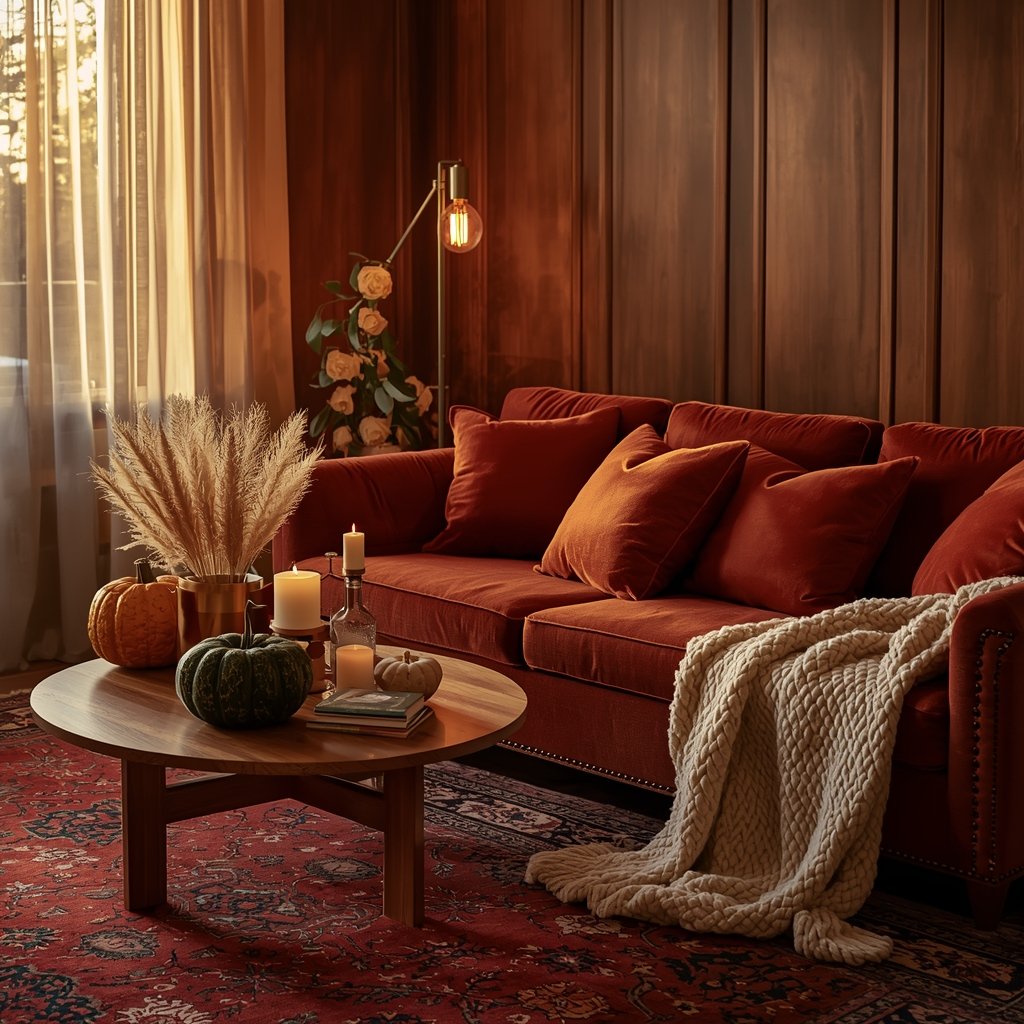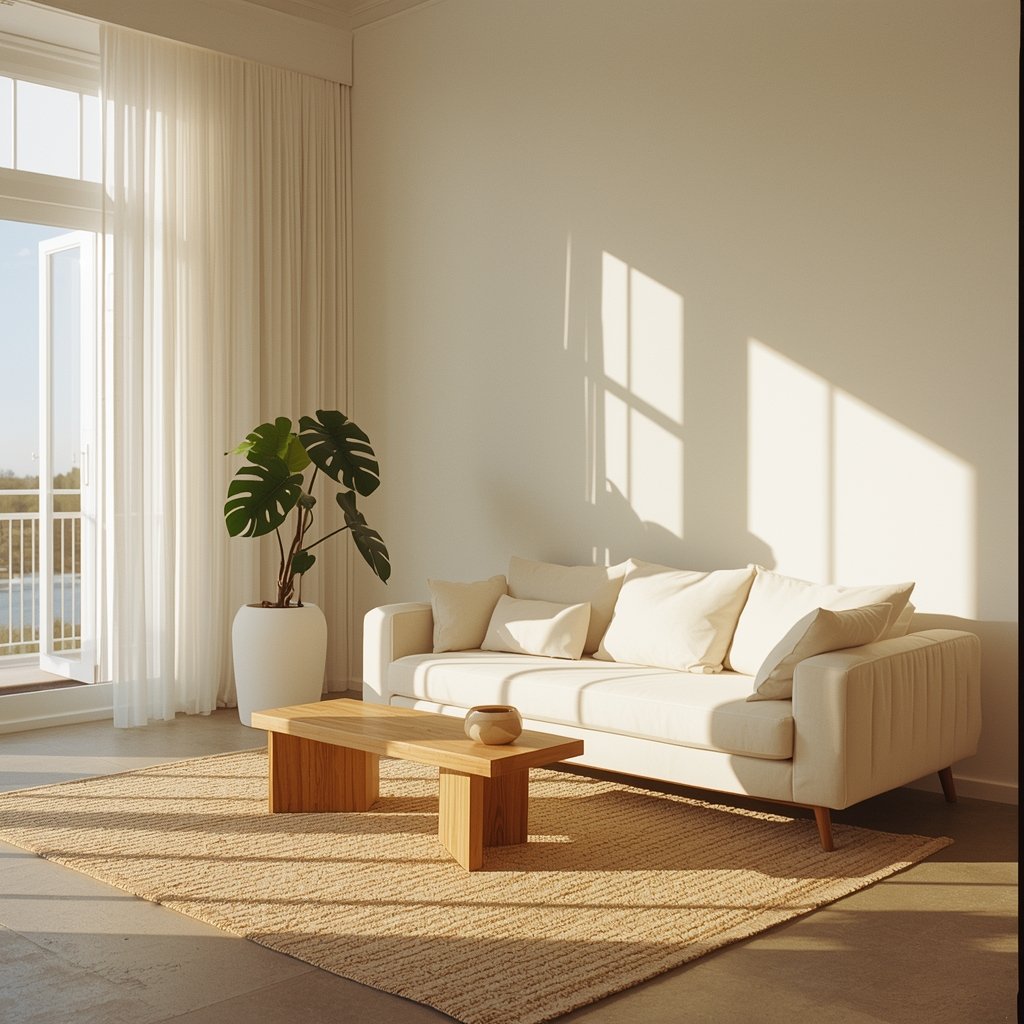
There is something quietly powerful about a living room that does not try too hard. A space where every piece earns its place, where breathing room is considered a design choice, and where calm feels built into the walls. These minimalist living room ideas are not about doing less — they are about doing exactly the right amount.
1. The Neutral Base: Building a Calm Foundation
Every strong minimalist living room starts with a neutral foundation that does the heavy lifting quietly. Think warm whites, soft greiges, and barely-there taupes spread across walls, floors, and large furniture pieces. These are not cold or sterile tones — when layered correctly, they create a room that feels like a slow exhale. Start with a linen or cotton sofa in oatmeal or ivory as your anchor piece. From there, let the floor do the talking: a wide-plank light oak or polished concrete surface grounds everything without demanding attention. The trick is to resist adding too much too soon. Build slowly, because in minimalism, restraint is the most powerful tool you have.
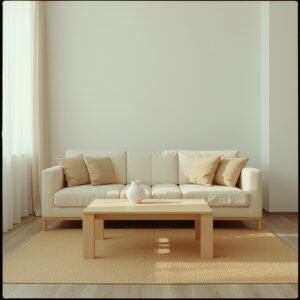
Once the base is established, focus on subtle variation within your neutral palette. Layer a slightly darker cream throw blanket over one arm of the sofa, or introduce a soft beige boucle cushion to add textural depth without introducing new color. A single matte-finish side table in warm birch wood adds warmth at eye level. Keep the walls bare for now — one well-chosen art piece can come later. Natural daylight will shift these tones beautifully throughout the day, making the room feel alive without any added decoration. This is the quiet confidence of minimalism: it never needs to shout.
2. Monochrome Done Right: White on White with Texture
White on white sounds risky, but in practice it is one of the most sophisticated directions a minimalist living room can take. The key is texture. Without it, an all-white room reads flat and clinical. With it, every surface becomes interesting. Start with a white or off-white wall and pair it with a sofa in a slightly warmer shade — a creamy white bouclé works beautifully here. Then layer in a fluffy ivory area rug underfoot, and introduce a knitted white throw draped casually over the sofa arm. Each piece is technically the same color family, but the variation in material — smooth plaster, nubby bouclé, woven rug — creates visual rhythm that keeps the eye moving.
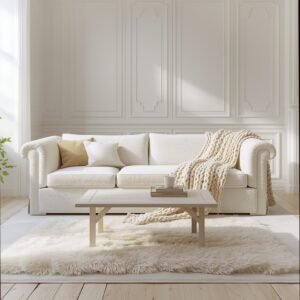
To stop the space from feeling empty, introduce subtle contrast through material finish rather than color. A matte white plaster table lamp paired with a glossy white ceramic vase creates interest through light reflection alone. Add a low wooden coffee table in a pale bleached finish to anchor the seating area — this single natural element grounds the entire composition. Try hanging one large abstract artwork in soft whites and very pale greys to give the wall a quiet focal point without disrupting the palette. Good lighting is essential here: warm-toned bulbs, not cool white, keep the space from tipping into sterile territory. This is a palette that rewards patience and careful curation.
3. Warm Minimalism: Earthy Tones Without the Clutter
Minimalism does not have to live in a cold, stark world of greys and whites. Warm minimalism is a growing approach that leans into earthy, nature-inspired tones while keeping the space edited and intentional. Think terracotta, sandy beige, burnt sienna, and muted clay — applied sparingly but with real intention. A terracotta-toned wall paired with a low-profile sofa in camel or tan leather immediately creates warmth without complexity. The furniture stays minimal in silhouette, but the color adds soul. Layer in a textured wool rug in sand or rust tones, and you have a room that feels both grounded and stylish. This is minimalism for people who find all-white rooms a little too cool for their taste.
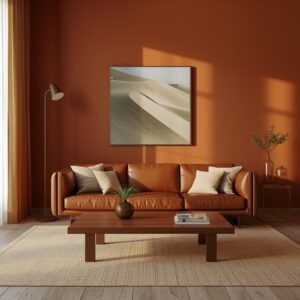
The magic of warm minimalism lives in the details. A handmade ceramic bowl in an ochre glaze sitting on a coffee table. A simple linen curtain in a warm terracotta shade that filters afternoon light into something golden. A single wooden shelf holding two or three objects — a small dried grass arrangement, a sculptural candle holder, a worn paperback. Nothing excessive, nothing random. Every object has warmth in its material or color, reinforcing the overall palette. Furniture legs in dark walnut or brushed brass hardware on a cabinet add richness at the edges of the room. The goal is a space that feels sun-warmed and collected, not decorated.
4. The Statement Sofa: One Bold Piece, Everything Else Quiet
In minimalist design, restraint allows one carefully chosen piece to carry the entire room. The statement sofa approach leans fully into this idea. Choose a sofa in a quiet but impactful color — deep sage green, dusty slate blue, or rich charcoal — and let it be the undeniable focal point of the space. Every other element in the room then steps back and plays a supporting role. Walls stay white or very light. The floor remains neutral. Accessories are reduced to the absolute minimum. The sofa is the art. This works best with a sofa that has a clean, architectural silhouette — no fussy curves, no busy detailing, just a strong, confident shape in a beautiful color.
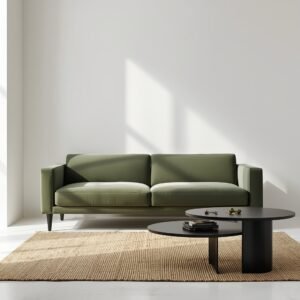
To make the statement sofa feel intentional rather than accidental, frame it properly. A large, neutral area rug in a slightly textured natural fiber beneath it creates a visual platform. A single low coffee table — ideally in a contrasting material like marble or dark steel — anchors the seating zone. Keep throw pillows to one or two maximum, in tones that are either very close to the sofa color or in a soft, warm neutral. Behind the sofa, a single large framed artwork or a blank wall works equally well — the point is to not compete. The room should make you look at the sofa first, last, and always.
5. Japandi Style: Where Japanese Calm Meets Scandinavian Simplicity
Japandi is not a passing trend — it is a design philosophy that feels genuinely relevant for modern minimalist living. It blends the warmth and functionality of Scandinavian design with the meditative calm and craft of Japanese interiors. The result is a space that feels both lived-in and serene. To achieve it, start with very low furniture: a low-slung sofa in natural linen or light grey, a floor-level coffee table, and perhaps a tatami-inspired mat or natural grass rug. The palette stays muted — warm whites, soft greys, and dusty greens or sage. Nothing shouts. Everything has been chosen with a kind of quiet consideration that you can feel when you walk into the room.
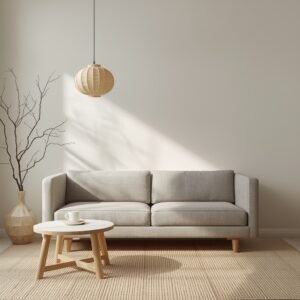
Materials are everything in Japandi. Raw wood, unglazed ceramics, hand-woven textiles, and natural stone work together to create a space that feels handmade and honest. A single branch of dried botanicals in a simple bamboo vase adds nature without being decorative in a fussy way. Walls can hold one piece of art — ideally something abstract, in ink or charcoal, with a Japanese brush-work quality. Lighting should be low and warm: a washi paper pendant shade diffuses light beautifully and adds to the mood without complicating the aesthetic. The goal of Japandi is to feel like the room has always existed this way — nothing forced, nothing temporary, everything quietly perfect.
6. Biophilic Minimalism: Bringing the Outdoors In
Biophilic minimalism is the answer for anyone who loves clean spaces but also craves the grounding energy of nature. The concept is simple: reduce everything to essentials, but let greenery and natural materials fill the sensory gaps. Start with a neutral room — white walls, a simple sofa in warm linen, and a light wood floor — and then introduce plants as design elements rather than afterthoughts. A single large fiddle-leaf fig in a matte white or earthy pot in one corner immediately changes the scale and energy of the room. A trailing pothos on a floating shelf adds life without taking up floor space. The plants are not just decorative — they are structural, creating vertical interest and defining zones within an open space.
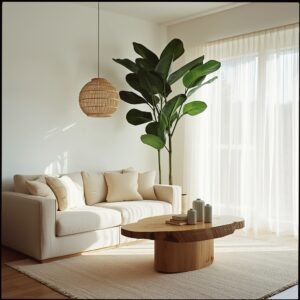
Natural materials amplify the biophilic effect throughout the room. A live-edge wooden coffee table brings an irregular, organic form that contrasts beautifully with the clean lines of minimal furniture. A woven rattan floor lamp adds texture and warmth without introducing color. Stone coasters, a small piece of driftwood, or a ceramic pot made to look like raw earth all reinforce the natural material language. Keep the plant count intentional — two or three statement plants rather than a crowded jungle. The space should breathe. The goal is for nature to feel like it belongs here, not like it was arranged for a photo. Paired with sheer curtains and plenty of daylight, this is a living room that genuinely feels restorative.
7. Dark Minimalism: Moody, Dramatic, and Still Very Clean
Minimalism does not have to be light and airy. Dark minimalism is a confident, dramatic take on the aesthetic — think deep charcoal walls, black furniture with clean lines, and a carefully controlled palette of near-blacks, warm dark greys, and rich jewel-toned accents. The key to keeping this from feeling oppressive is balance and light control. A deep charcoal or near-black wall works best in a room with at least one large window or source of natural light. Pair the dark walls with a sofa in a complementary dark tone — a slate grey velvet or a deeply toned dark green — and then introduce warm contrast through lighting, materials, and one or two lighter elements.
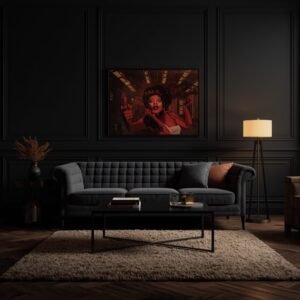
Texture becomes even more critical in a dark minimalist room because color contrast is limited. A chunky knit throw in charcoal or dark ivory, a low coffee table in matte black metal, and a sheepskin rug in off-white add sensory variety without disrupting the moody palette. Lighting does serious work here: warm Edison bulb pendants or a brushed brass floor lamp creates pools of golden warmth that make the dark walls feel inviting rather than cold. One or two plants in dark matte pots — especially a snake plant or ZZ plant with architectural foliage — add life without breaking the palette. This is a room that feels like a deliberate sanctuary. Quiet, sophisticated, and completely intentional.
8. The Floating Shelf Approach: Vertical Minimalism
When floor space is limited, vertical space becomes your most valuable design tool. The floating shelf approach in minimalist living rooms uses walls intentionally, turning vertical surfaces into curated displays that draw the eye upward and create the illusion of more space below. The key word here is curated. A floating shelf works only when every object on it has been chosen carefully. Think: one ceramic vase, one small framed print leaning against the wall, a single trailing plant, and perhaps one or two books positioned horizontally with purpose. The shelf itself should be simple — a clean plank in pale oak or white-painted MDF, with no visible brackets or very slim ones that disappear against the wall.
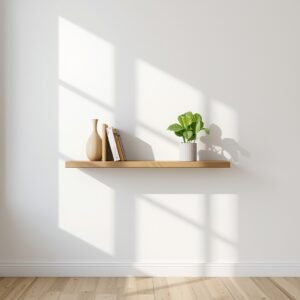
Grouping is important when styling minimalist floating shelves. Use the rule of odd numbers: three items feel more natural than four. Vary the heights of objects to create movement — tall vase on one end, low stack of books in the middle, small trailing plant on the other end. Keep the color palette of the shelf objects consistent with the rest of the room — do not introduce an entirely new color scheme just because the objects are small. Leave generous space between items so each piece can breathe and be seen clearly. Below the shelf, keep the floor and furniture area completely clear. The contrast between the styled shelf above and the deliberately empty space below is what makes the composition feel intentional and visually satisfying.
9. Open Plan Minimalism: Zoning Without Walls
Open plan living rooms present a unique minimalist challenge: how do you create a space that feels intentional and defined without the structure of walls? The answer lies in strategic zoning — using rugs, furniture arrangement, and lighting to carve out distinct areas within one continuous space. Start with a large area rug that defines the sitting zone. This is the single most important tool in an open plan room. The rug acts as an invisible wall, pulling the sofa, coffee table, and accent chairs into a cohesive cluster that feels like a room within a room. Keep the rug neutral — a large jute, wool, or flatweave piece in oatmeal or light grey works for almost any palette.
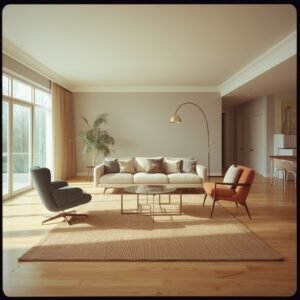
Furniture arrangement in an open plan minimalist space should face inward, creating a conversation-friendly zone that does not bleed into the dining or kitchen area. A sofa and two accent chairs arranged in a slight U-shape around a low coffee table naturally encloses the space. Avoid pushing all furniture against the walls — floating pieces in the middle of the room immediately reads as more designed and intentional. Use a single statement floor lamp to create a warm, lit zone in the evenings, reinforcing the boundary of the sitting area with light. Keep the palette consistent between zones to maintain visual calm across the full open plan. Same wood tones, same neutral anchors — variety comes from texture and form, not competing color stories.
10. Curated Simplicity: The Art of Knowing When to Stop
The final and perhaps most important idea in minimalist living room design is not about what you add — it is about knowing when to stop. Curated simplicity is the practice of editing your space down to its most honest version. It means looking at what you have and asking whether each item genuinely belongs. Not whether it is nice, but whether it is necessary in this space, at this scale, in this arrangement. The result is a room that feels resolved. Not empty, not cold, but complete. A sofa, a coffee table, one rug, one lamp, one plant. When every piece is chosen well and placed with care, you do not need more.
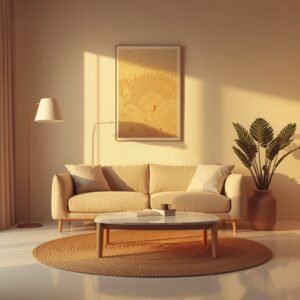
The hardest part of curated simplicity is maintaining it. Once you have achieved the feeling, the instinct is often to add just one more thing. Resist it. Instead, focus on quality over quantity at every turn. One beautiful ceramic table lamp is worth more to the space than three decorative objects that were bought on impulse. One oversized piece of original art gives the room more presence than a gallery wall of smaller prints. Invest in the best version of each essential item and then leave the rest of the room to breathe. Minimalism, at its best, is not a style trend — it is a commitment to clarity. A room that says everything it needs to say with exactly what is there, and nothing more.