Small Kitchen Organization: 10 Brilliant Ideas That Actually Help
Table of Contents
- Use Vertical Storage to Free Up Counter Space
- Try Drawer Dividers for Small Kitchen Organization
- Hang a Pegboard for Pots and Pans
- Use Clear Bins for Pantry Organization
- Add Under-Sink Storage Solutions
- Install Floating Shelves for Extra Display Space
- Use Cabinet Door Organizers
- Group Items by Zone for Easy Access
- Use Stackable Containers to Maximize Shelves
- Add a Rolling Cart for Flexible Storage
Introduction
If your tiny kitchen feels like it’s bursting at the seams, you are not alone, and there is a real fix for that feeling. Small kitchen organization is not about buying fancy gadgets, it’s about using every inch smarter so cooking feels calm instead of chaotic. Let’s walk through ten simple ideas that turn a cramped kitchen into a space you actually enjoy standing in.
1. Use Vertical Storage to Free Up Counter Space
When floor space is limited, going upward is one of the smartest small kitchen organization tricks you can use. Tall, narrow shelving units tucked into corners or beside the fridge can hold spices, cookbooks, or extra dishware without eating into your walking space. Choose shelves in a warm wood tone or matte black to add contrast against light-colored walls, and layer in woven baskets on the lower shelves to hide smaller clutter. This kind of styling gives your kitchen a boutique feel while quietly solving your storage problem.
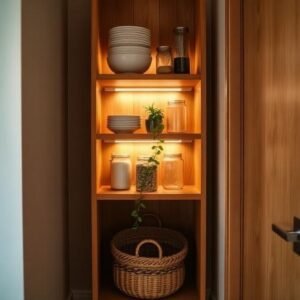
Lighting plays a bigger role here than most people realize. A small LED strip tucked under each shelf adds a soft glow that makes the vertical unit feel intentional, almost like a display rather than storage. Pair this with a few trailing plants like pothos on the top shelf to soften the hard lines of metal or wood. The combination of greenery, warm light, and functional storage turns a plain corner into one of the most charming parts of your kitchen.
2. Try Drawer Dividers for Small Kitchen Organization
Drawers turn into chaos fast, especially in a small kitchen where every tool gets crammed into the same space. Bamboo or acrylic drawer dividers instantly fix this by giving each utensil its own lane, so you’re not digging through a tangled mess every time you need a spatula. Choose dividers in a soft neutral tone that matches your cabinetry, since this keeps the drawer looking cohesive even when it’s open. Adding a thin cork or linen liner underneath also softens the sound of metal utensils clinking together
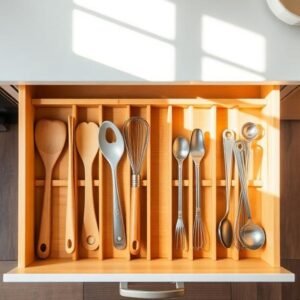
Beyond function, organized drawers change how your whole kitchen feels day to day. When you open a drawer and see everything in its place, it creates a small sense of calm that carries into the rest of your cooking routine. Try grouping items by task, like a baking drawer or a everyday-use drawer, so your brain doesn’t have to search every time. This simple shift is one of the easiest small kitchen organization wins you can make in a single afternoon.
3. Hang a Pegboard for Pots and Pans
A pegboard might be the single most transformative tool for small kitchen organization because it turns wasted wall space into functional storage. Mount it above the stove or near a prep area, then hang pots, pans, and even utensils using S-hooks. Choose a pegboard in a soft sage green or warm terracotta to make it feel like decor rather than just storage. This method also keeps your most-used cookware within arm’s reach, which speeds up cooking on busy weeknights.
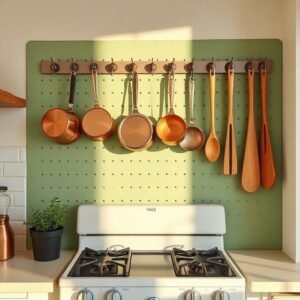
Styling a pegboard well is all about balance and spacing. Group similar items together, like all your pans on one side and utensils on the other, so the wall doesn’t feel cluttered. Add a small potted herb plant on a nearby shelf to bring in a touch of greenery and soften the industrial look of hanging metal. With the right layout, this wall becomes a functional piece of art that makes your small kitchen feel more open and less crowded.
4. Use Clear Bins for Pantry Organization
Nothing helps small kitchen organization more than switching bagged snacks and loose items into clear bins. When everything is visible, you stop losing track of what you have, which also cuts down on food waste and unnecessary grocery trips. Choose bins with a matte or frosted finish if you want a softer look than fully clear plastic, and label each one with a simple kraft paper tag for a natural, homey feel. Group similar items together, like all baking supplies in one bin and snacks in another.
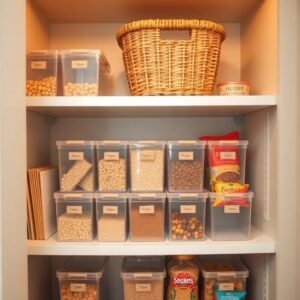
The way you arrange these bins on your shelf also matters for both function and style. Place taller bins toward the back and shorter ones in front so nothing gets hidden or forgotten. Adding a woven basket on the top shelf for less-used items keeps the whole pantry looking intentional rather than random. This kind of thoughtful layering is what makes small kitchen organization feel effortless instead of like a constant chore.
5. Add Under-Sink Storage Solutions
The space under your sink is often the most neglected part of small kitchen organization, yet it holds real potential once you set it up right. Stackable bins or a pull-out drawer system can turn that awkward pipe-filled space into organized storage for cleaning supplies and extra sponges. Choose bins in a soft gray or white tone so the area still feels clean and bright even when the cabinet door is open. A small tension rod can also hold spray bottles upright, which frees up floor space for taller items.
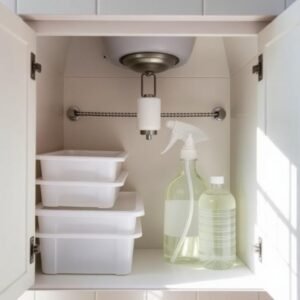
Lighting and layout make a bigger difference here than people expect. Adding a battery-operated stick-on light inside the cabinet means you can actually see what you’re grabbing instead of digging blindly. Keep frequently used items like dish soap toward the front and store backup supplies in labeled bins toward the back. This small adjustment turns a forgotten cabinet into one of the most functional corners of your kitchen.
6. Install Floating Shelves for Extra Display Space
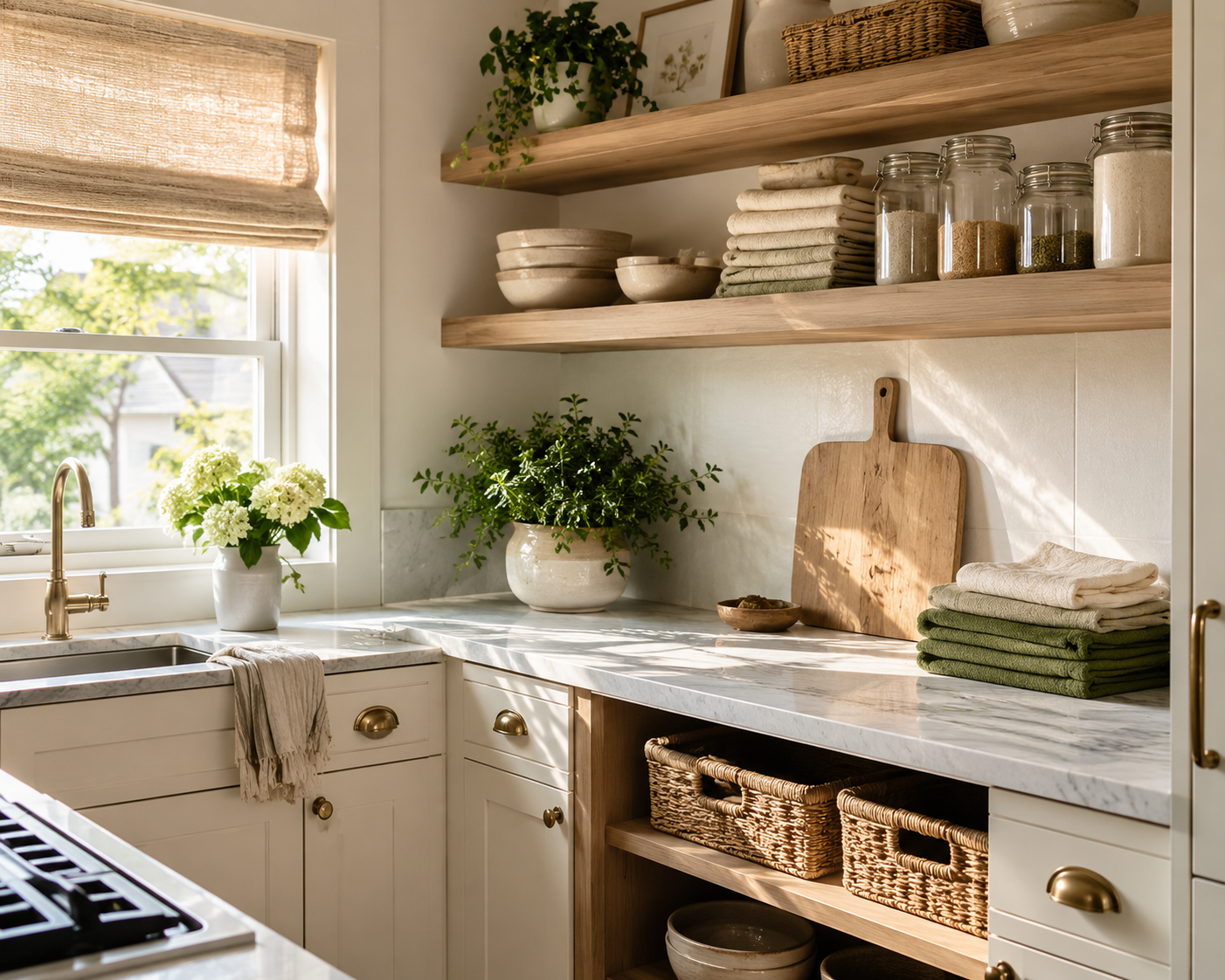
Floating shelves are a favorite for small kitchen organization because they add storage without taking up any floor space at all. Mount two or three shelves at staggered heights above your counter, then style them with a mix of everyday dishware and a few decorative pieces like a small vase or ceramic jar. Choose warm wood tones if your kitchen leans cozy, or crisp white shelves for a brighter, airier feel. Keep the styling simple, since overcrowded shelves can make a small space feel even more cramped.
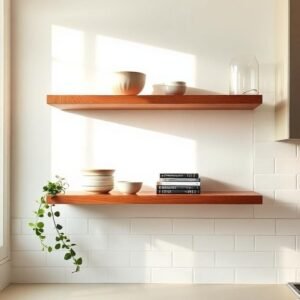
The key to making floating shelves feel intentional is layering height and texture. Stack a few cookbooks horizontally, then lean a cutting board against the wall behind your bowls for added depth. A small trailing plant on the top shelf softens the straight lines of the wood and adds a touch of life to the space. This kind of styling makes your small kitchen organization feel curated rather than just functional.
7. Use Cabinet Door Organizers
The inside of a cabinet door is prime real estate that most people forget about in small kitchen organization. Mounting a simple wire or acrylic rack on the inside of your cabinet doors gives you extra room for spice jars, foil boxes, or cutting boards. Choose a rack finish that matches your cabinet hardware, like brushed brass or matte black, so it blends in rather than looking like an afterthought. This trick alone can free up an entire shelf’s worth of space inside the cabinet itself.
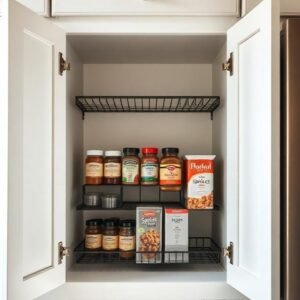
Once the rack is installed, think about grouping items by how often you use them. Keep daily spices at eye level and less-used items like extra foil or plastic wrap toward the bottom of the rack. Adding small chalkboard labels to spice jars keeps everything easy to find even when the door is closed for most of the day. This is a small kitchen organization upgrade that takes less than an hour but saves you shelf space for months to come.
8. Group Items by Zone for Easy Access
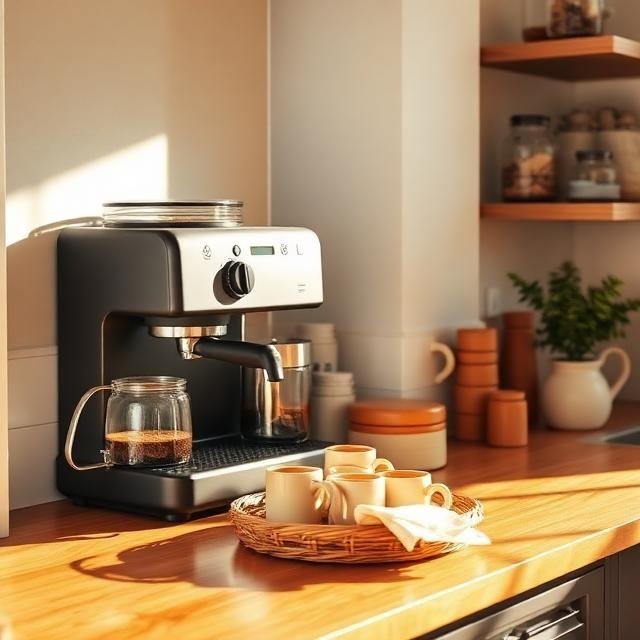
One of the most overlooked parts of small kitchen organization is arranging items by how you actually use your kitchen, not just by category. Set up a coffee zone near your mug shelf, a baking zone near your mixing bowls, and a prep zone close to your cutting boards and knives. This kind of layout means you’re not walking across the kitchen mid-task just to grab one tool. Style each zone with a small tray or mat underneath to visually separate it from the rest of the counter.
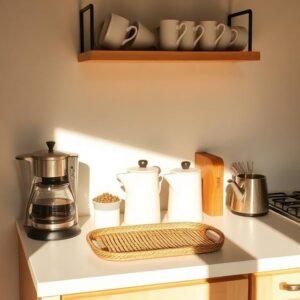
Color and texture can help define these zones without adding clutter. A woven tray under your coffee station paired with a ceramic canister for grounds creates a cohesive little corner that feels purposeful. Keep the color palette consistent across zones, sticking to warm neutrals or soft pastels, so the kitchen still feels unified even though it’s divided into sections. This zone-based approach makes small kitchen organization feel natural instead of forced.
9. Use Stackable Containers to Maximize Shelves
Flat, stackable containers are a game changer for small kitchen organization because they let you use vertical space inside cabinets that would otherwise sit half-empty. Choose containers with a low profile and square shape so they stack cleanly without wasted gaps between them. A soft matte finish in white or beige keeps the look uniform, even if the containers come from different brands. This small shift can double your usable shelf space almost overnight.
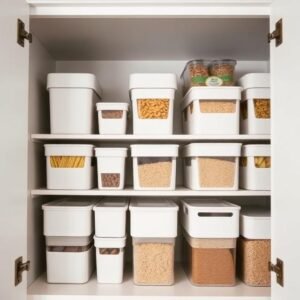
Once stacked, keep the heaviest containers on the bottom and lighter ones like dried herbs or tea bags on top for easy access. Adding a small pull-out riser shelf between stacks makes it even easier to reach items in the back without unstacking everything. This kind of thoughtful layering keeps your cabinets looking neat and makes small kitchen organization feel like second nature rather than a constant reorganizing project.
10. Add a Rolling Cart for Flexible Storage
When your kitchen simply doesn’t have enough built-in storage, a rolling cart is one of the best small kitchen organization solutions because it moves wherever you need it. Use it as extra counter space during cooking, then roll it against the wall when you need more room to move around. Choose a cart with two or three tiers in a warm wood or matte black finish so it complements your existing cabinetry rather than standing out awkwardly. Stock it with items you use often but don’t have cabinet space for, like cutting boards or baking trays.
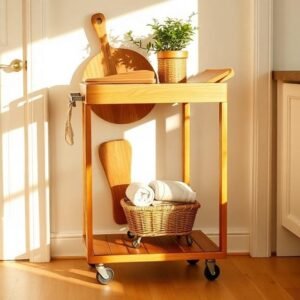
Styling the cart well makes it feel like a natural part of your kitchen rather than a temporary fix. Add a small basket on the bottom tier for kitchen towels, and keep the top tier reserved for a few decorative touches like a small plant or a stack of cloth napkins. This balance of function and style is what makes a rolling cart such a flexible piece for small kitchen organization, especially in kitchens where every square foot counts.
Final Thoughts
Small kitchen organization doesn’t need a full renovation or an expensive haul of storage gadgets to work. Most of these ideas take an afternoon, a few affordable bins or shelves, and a little intention about where things live. Start with just one or two ideas from this list, and you’ll likely notice your kitchen already feels calmer and easier to move through.
For more inspiration on making the most of compact spaces, check out our guide on small front porch ideas and our post on rustic kitchen ideas. You can also explore more home organization inspiration over at Home Emuse.